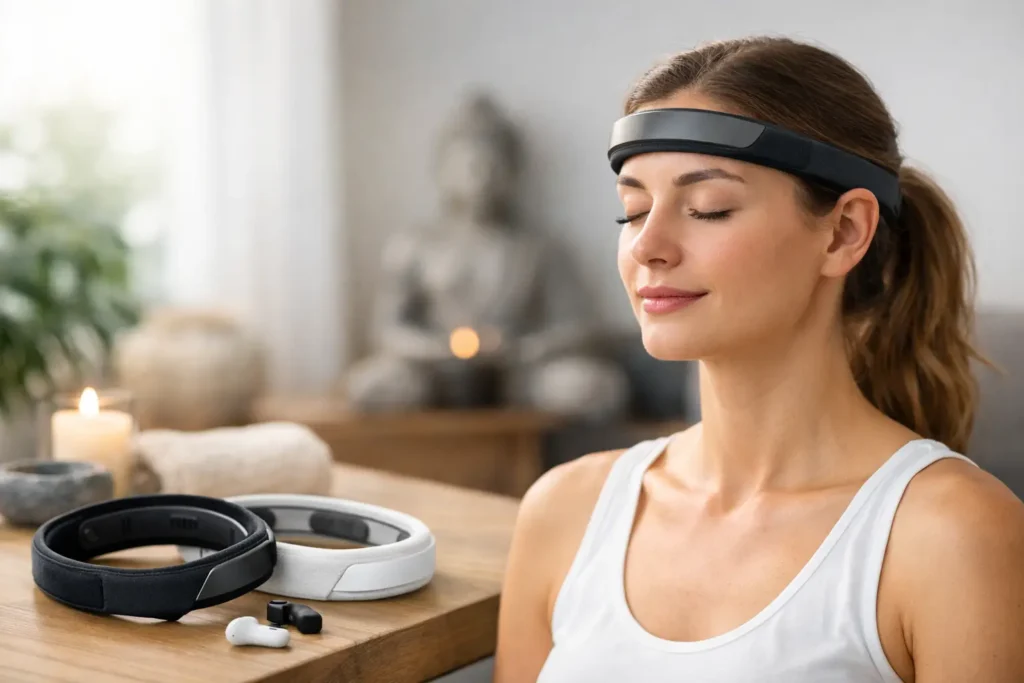
A meditation headband can sound like a shortcut to a calmer mind. Put it on, follow a session, and get data about your focus. In practice, the right device can make meditation feel more approachable, while the wrong one can become an expensive gadget in a drawer. Knowing how to pick a meditation headband starts with a simple question: do you want guidance, feedback, better sleep habits, or a more consistent meditation routine?
These devices are not all built for the same job. Some use sensors to estimate brain activity and provide real-time audio feedback. Others are primarily sleep-focused bands with relaxation content, while a few concentrate on heart rate, breathing, or simple guided sessions. The best choice is the one that removes friction from a habit you already want to build.
Start With the Outcome You Want
Before comparing sensor counts or app ratings, decide what you want the headband to help you do. If you are new to meditation and struggle to sit without checking the clock, guided sessions and gentle progress prompts may be more valuable than detailed data. If you already meditate regularly, real-time feedback may be appealing because it gives you another way to notice when your attention has drifted.
Sleep is a separate use case. A headband designed to help you fall asleep or understand nighttime patterns may be useful if your winding-down routine is the real issue. It is not automatically the best option for daytime mindfulness. Consider when and where you will wear it. Ten quiet minutes in a chair requires very different comfort and battery needs than wearing a band through the night.
Be realistic about what a device can measure. Consumer meditation headbands may estimate attention, calm, or recovery from signals such as brain activity, movement, and heart rate. Those scores can be useful prompts, but they are not a diagnosis and they are not a final grade on whether you meditated “correctly.” Meditation is full of normal mental wandering. A useful device helps you return to the practice without turning relaxation into a performance review.
How to Pick a Meditation Headband for Comfort
Comfort is not a minor detail. It is often the deciding factor between a headband you use three times a week and one you stop wearing after two sessions. Look closely at the band’s shape, materials, adjustability, and sensor placement.
For short seated sessions, a slightly firmer fit may be fine if it keeps sensors in place. For sleep, pressure around the forehead, temples, or ears can quickly become distracting. A low-profile fabric design may feel more natural in bed, but it can also shift more easily than a structured band. If you have thick hair, curly hair, a sensitive scalp, or wear glasses, fit deserves even more attention.
Pay attention to sizing details rather than assuming one size fits all. An adjustable band is helpful, but adjustment mechanisms can create pressure points. Also check whether the device needs direct skin contact to work. Sensors that require a precise forehead position can be more finicky than a simple audio-based relaxation headband.
If possible, buy from a retailer with a clear return window. A headband can look comfortable in photos and still feel wrong after 20 minutes. This is one category where a practical return policy is part of the product value.
Understand What the Sensors Actually Do
The term “meditation headband” covers a wide range of technology. Knowing the basics helps you avoid paying for features you will not use.
EEG-based headbands use electrodes to pick up electrical activity from the scalp. Their apps may translate those signals into feedback during a session, often through changing sounds, visual cues, or a post-session focus score. This can be engaging for people who enjoy measurable progress. It can also be frustrating if you expect laboratory-level precision from a device used at home.
Other wearables rely more heavily on heart rate, heart rate variability, breathing patterns, or motion. These signals can support stress and recovery insights, though they do not measure meditation in the same way as an EEG device. A sleep-oriented band may track movement and sleep stages while offering soundscapes or guided wind-down content.
Ask yourself whether you want live feedback or a simple record of your routine. Live feedback can make a beginner feel supported, but some experienced meditators prefer less stimulation. If tones, scores, and app notifications pull you out of the moment, a simpler device – or no device at all – may be the better fit.




Evaluate the App Before You Buy the Hardware
The headband is only half the experience. Most of the daily value comes from the app, including its guided content, session history, data presentation, and subscription model. A well-made band paired with an app you dislike is still a poor purchase.
Look for a clear answer to a few practical questions: Are there beginner sessions? Can you choose short sessions for busy days? Is there content for stress, sleep, focus, or breathing? Can you use the device without an ongoing membership, and if so, what features remain available?
Subscription costs deserve special attention. A lower upfront price can be less of a deal if essential meditations, reports, or feedback tools sit behind a monthly fee. On the other hand, a subscription may be worthwhile if you use fresh guided content several times a week. Add the likely annual cost to the purchase price before deciding which option is actually more affordable.
Also consider your preferred style of instruction. Some people want a calm voice and straightforward breathing cues. Others want ambient sound, coaching, short science explainers, or gamified goals. Read recent user feedback with an eye for repeated complaints about app glitches, confusing scores, content quality, or canceled subscriptions. Those everyday details matter more than a long feature list.
Check Battery, Cleaning, and Daily Friction
Wellness technology works best when it asks very little of you. A headband that needs constant charging, careful calibration, or a complicated cleaning routine may not suit a busy household or travel-heavy schedule.
For daytime meditation, several sessions on one charge may be enough. For overnight use, make sure the stated battery life comfortably covers a full night rather than merely reaching the minimum on paper. Check how it charges, too. A proprietary cable is easy to misplace, while a standard charging method can be more convenient.
Cleaning is especially relevant for fabric bands and devices with forehead sensors. Sweat, skincare products, hair products, and regular use can affect comfort and sensor contact. Look for removable, washable fabric components when available, and follow the maker’s cleaning instructions for electronic parts. If maintenance sounds annoying now, it will be more annoying after the novelty wears off.
Treat Privacy as a Buying Feature
Meditation data can be personal. Even if a device is not collecting medical information, your sleep patterns, mood check-ins, session times, and biometric readings can reveal a lot about your routine. Review what data the app stores, whether you can delete it, and whether the company explains how it uses aggregated information.
You do not need to become a privacy expert to make a sensible choice. Look for plain-language controls, account deletion options, and a privacy policy that does more than make vague promises. Be cautious when an app asks for permissions that do not make sense for its core function. A meditation device should not require access to every corner of your phone to be useful.
PO-Store's Top Meditation Headband Picks


Muse S (Gen 2 / Athena)
Best for: People combining meditation practice with overnight sleep tracking

Decide Whether the Price Matches Your Commitment
Meditation headbands range from relatively accessible relaxation tools to premium biofeedback devices. Higher cost may bring better sensors, more refined materials, stronger app development, or deeper analytics. It does not guarantee that you will meditate more often.
For a first-time buyer, value usually comes from comfort, clear guidance, and low friction. You may not need advanced metrics until you know that guided meditation is a habit you enjoy. For someone already committed to a regular practice, paying more for responsive feedback or detailed session trends can make more sense.
Avoid buying based only on promises of stress relief, sharper focus, or better sleep. Those outcomes depend on your routine, overall health, and how consistently you use the tool. The headband should support your practice, not carry the entire burden of changing your habits.
A good final test is simple: picture using the device on an ordinary Tuesday, not on the optimistic day you place the order. If it feels comfortable, understandable, affordable to maintain, and suited to the moments when you genuinely need a reset, it has a real chance of earning its place in your routine.