You usually notice bad indoor air after it starts affecting your day – dry throat in the morning, stuffy bedrooms, cooking smells that linger too long, or that heavy feeling when the windows stay shut for days. That is why the best air quality monitors indoors have become less of a niche gadget and more of a practical home tool. A good monitor helps you spot patterns, figure out what is triggering them, and make smarter decisions about ventilation, filtration, and humidity.
The tricky part is that not every monitor measures the same things, and not every household needs the same level of detail. Some people want a simple device that changes color when air quality drops. Others want app history, VOC tracking, and enough data to see whether the purifier in the nursery is actually doing anything. The right pick depends on your home, your sensitivities, and how much information you will realistically use.
What the best air quality monitors indoors should actually measure
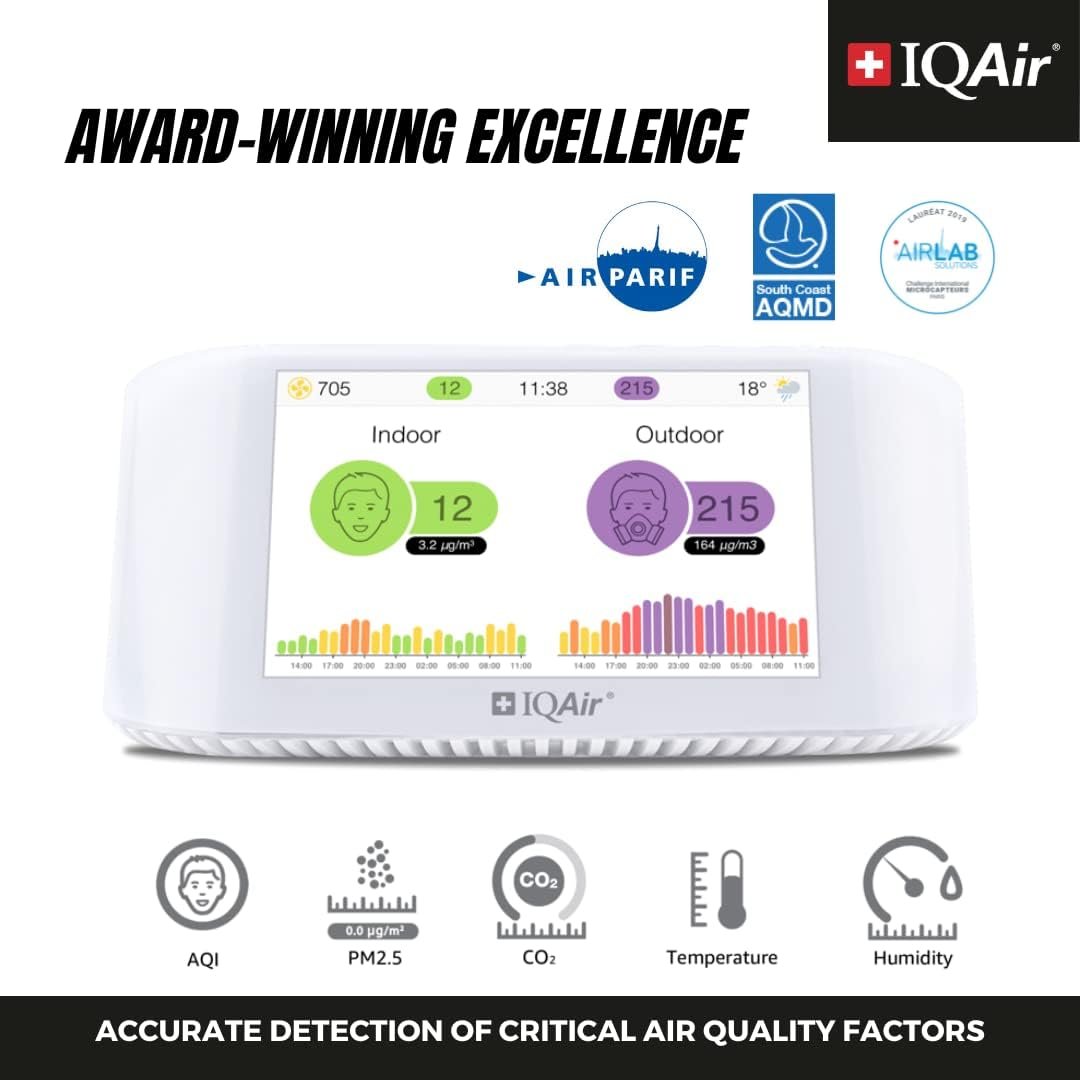
For most shoppers, PM2.5 is the most useful metric to prioritize. These fine particles come from cooking, smoke, dust, candles, and outdoor pollution that makes its way inside. If a monitor only tracks temperature and humidity, it may be helpful for comfort, but it is not really giving you a full air quality picture.
Carbon dioxide is another valuable measurement, especially in bedrooms, home offices, and classrooms. High CO2 levels do not mean your home is toxic, but they can signal poor ventilation. If you feel sluggish in a closed room after a few hours, a monitor with CO2 tracking can confirm whether stale air is part of the problem.
VOC readings can also be helpful, but this is where buying gets less straightforward. Many consumer monitors estimate total VOCs rather than identify specific chemicals. That still has value. It can reveal spikes from cleaning products, paint, off-gassing furniture, or gas stove use. But it is best treated as a trend indicator, not a lab-grade diagnosis.
Humidity and temperature matter more than many people expect. Air that is too dry can irritate skin, sinuses, and throats. Air that is too humid can encourage mold growth and dust mites. A monitor that tracks these basics alongside particulate levels tends to be more useful in daily life than one that chases exotic metrics most people will never act on.
Best air quality monitors indoors by type
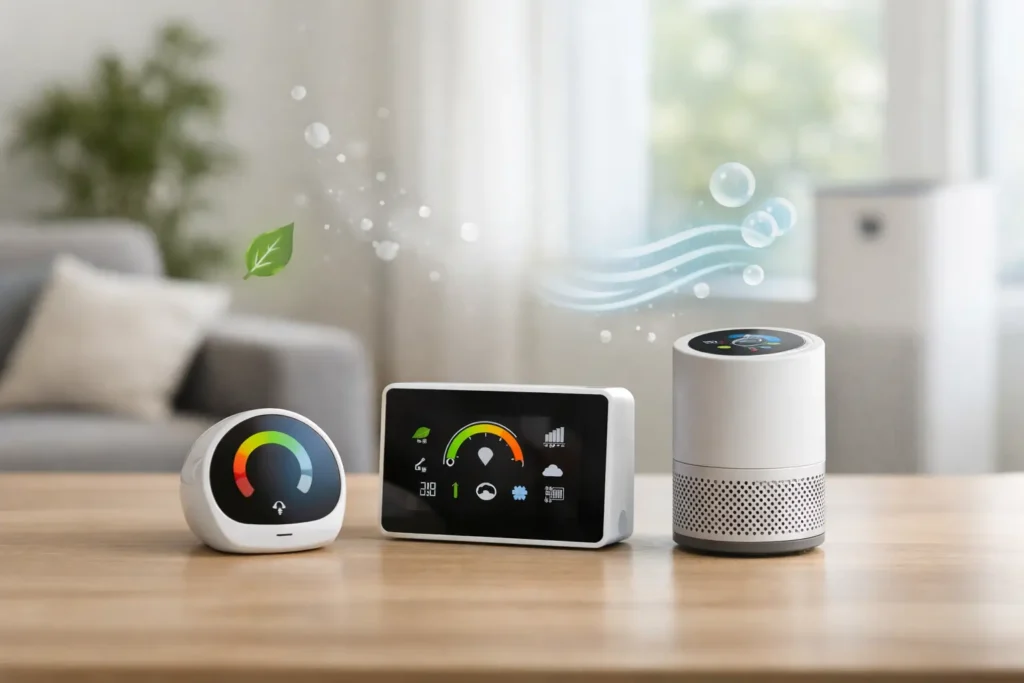
If you want the simplest route, look for a monitor with an easy display, visible air-quality indicator, and reliable PM2.5 tracking. These are best for kitchens, bedrooms, and living rooms where you want quick feedback without opening an app every hour. A good simple monitor should tell you when air worsens during cooking or when a purifier has brought it back down.
For data-focused households, app-connected models are worth the extra cost. These monitors store trends over days or weeks, which makes it easier to answer practical questions. Did wildfire smoke creep in overnight? Does opening one window help more than running a fan? Is the baby room actually less dusty than the hallway? Historical charts turn guesswork into a pattern you can respond to.
If your main concern is ventilation, prioritize a model with true CO2 monitoring rather than estimated readings. This matters for remote workers, families with sealed newer homes, and anyone who spends long hours in one room. The trade-off is price. Reliable CO2 sensors usually cost more, but they also offer some of the clearest insight into whether your air feels stale because it actually is.
For allergy-prone homes, the sweet spot is usually a monitor that combines PM2.5, humidity, and app alerts. You do not always need every metric available. You need enough information to know when to run a purifier, when to vacuum, and when your indoor environment is drifting into a range that makes symptoms worse.
Features worth paying for and features you can skip
Accuracy matters more than a crowded spec sheet. A monitor that does a solid job with particles, humidity, and trends is often more useful than one that claims to detect everything under the sun. If the readings are inconsistent or the app is frustrating, you will stop checking it.
A clear display is worth paying for. Some of the best models let you glance across the room and understand what is happening immediately. Color-coded indicators, readable numbers, and simple labels make a difference in real use. If a monitor hides everything behind an app, it can feel more like homework than help.
App quality is another separator. Good apps give you alerts, history, and plain-English explanations. Weak apps bury useful information in clutter or bombard you with notifications that do not change what you can do. If you know you will not open an app often, choose a monitor that works well as a standalone device.
Calibration and warm-up time also matter. Consumer air quality monitors are not instant-read thermometers. Many need a setup period and perform best when left in a stable spot away from direct vents, windows, or constant drafts. If you move one around all day, expect more variability.
As for what to skip, overly complex smart-home integrations are not essential for most buyers. They can be nice if you already automate purifiers or fans, but they should not be the reason you choose a monitor. Start with accurate readings and usable information first.
How to choose the right model for your home
In a small apartment, you may only need one monitor placed near the area where you spend the most time. Open-plan layouts make a single device more useful because cooking, cleaning, and airflow changes tend to affect the same shared space. A compact monitor with PM2.5 and humidity tracking is often enough.
In a larger house, one monitor may not tell the full story. Bedrooms, basements, and main living areas can behave differently, especially if you have pets, older HVAC systems, or moisture issues. In that case, it can make more sense to buy a better primary monitor for your busiest room and a simpler secondary unit for another problem area.
If you have babies, young kids, or anyone with asthma, focus on consistency over novelty. You want a device that is easy to trust and easy to check. A complicated dashboard is less valuable than dependable alerts that tell you when air quality has actually changed.
If wildfire season is a concern where you live, PM2.5 tracking moves from useful to essential. During smoke events, indoor air can worsen fast, even when windows are closed. A monitor helps you verify whether your purifier setup is keeping up or whether you need to seal leaks and reduce indoor particle sources like candles or frying.
Common mistakes people make with indoor air monitors
One common mistake is placing the monitor right next to a purifier. That gives you a flattering reading, not a realistic one. Set it where people actually breathe and spend time, ideally a few feet off the ground and away from direct airflow.
Another mistake is reacting to every short spike. Air quality changes when you cook, vacuum, spray cleaner, or open a door. That does not mean the monitor is broken or that your home has a serious air problem. The more useful approach is to watch how quickly levels return to normal and what consistently triggers longer drops in air quality.
People also expect a monitor to solve the problem by itself. It will not. It is a decision tool. It tells you when to ventilate, when to run the purifier, when to replace filters, or when humidity needs attention. The value comes from what you do with the information.
Are expensive models worth it?
Sometimes yes, sometimes no. If you just want to know whether cooking, dust, and seasonal smoke are affecting your space, a solid mid-range monitor is usually enough. You do not need professional-grade equipment to make better home decisions.
Higher-end models earn their price when they provide more dependable sensors, better historical data, and true CO2 readings. That extra detail is worth it for households managing allergies, asthma, sleep quality, or home-office ventilation. It is less worth it if you mostly want a visual cue to open a window once in a while.
PO-Store’s practical lens on this category is simple: buy the monitor that matches the action you are willing to take. If you will use trend data, pay for better tracking. If you want quick reassurance, prioritize clarity and ease.
The best monitor is not the one with the longest feature list. It is the one that helps you notice what your home air is doing and makes the next step obvious, whether that is turning on a purifier, cracking a window, or finally dealing with that damp room you have been ignoring.








Pingback: Air Purifier Versus Humidifier Explained | PO‑Store
Pingback: Smart Thermostat Buying Guide for Homeowners | PO‑STORE