

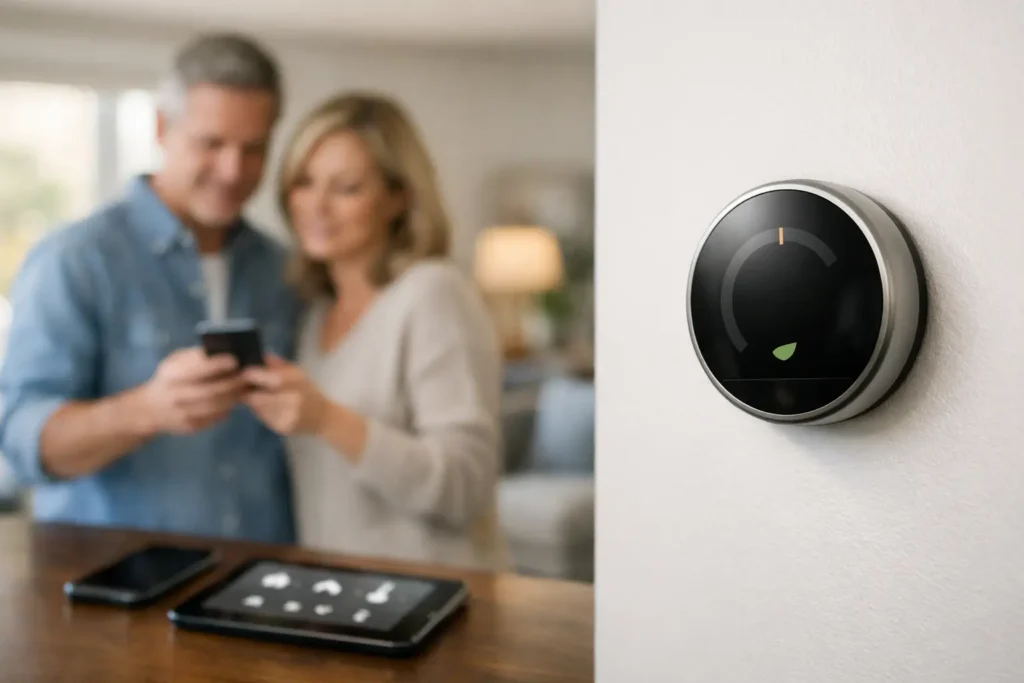
Your thermostat can quietly waste money for years, which is why a smart thermostat buying guide matters more than most people expect. The right model can trim energy use, smooth out hot and cold spots, and make your home feel more consistent without turning temperature control into a part-time job. The wrong one can leave you stuck with wiring problems, app frustration, or features you never actually use.
A smart thermostat sounds simple on paper. It connects to Wi-Fi, lets you adjust settings from your phone, and may learn your routine over time. But when you start comparing models, the real questions show up fast. Will it work with your HVAC system? Do you need remote sensors? Is voice control useful or just nice to have? And are you buying real convenience, or just a flashier wall display?
Smart thermostat buying guide: start with compatibility
Before you compare features, check whether the thermostat will work with your heating and cooling system. This is the step that saves the most regret.
Most smart thermostats are designed for common forced-air systems with central heating and air conditioning, but not every home uses that setup. Heat pumps, electric baseboard heating, dual-fuel systems, line-voltage systems, and multi-stage HVAC can change what you need. Some thermostats support these systems well. Others do not support them at all.
The C-wire question matters too. Many smart thermostats need a C-wire for constant power. Some models can work without one in certain homes, and a few include adapters, but this is where a lot of installation headaches begin. If you take off your current thermostat faceplate and see labels that do not match the new unit’s requirements, slow down and verify before buying.
If you live in an older house, this matters even more. Older wiring can be inconsistent, and older HVAC systems may not play nicely with every smart model. A thermostat with broad compatibility and a guided setup process is often worth paying more for than a cheaper model with limited support.

PO-STORE
Grab something awesome from our shop!


What a smart thermostat should actually improve
A good smart thermostat should make daily life easier first. Energy savings are real, but convenience is usually what people notice immediately.
The most useful improvement is scheduling that fits real routines. If your weekdays look different from weekends, or if nobody is home for long stretches, a smart thermostat can stop your system from heating or cooling an empty house. Geofencing can also help by adjusting temperatures when everyone leaves and returning to comfort mode before you get home.
Remote control is another practical upgrade. If you travel often, work unpredictable hours, or just forget to change the temperature before bed, app control earns its keep quickly. It is also helpful during extreme weather, when checking your home’s temperature from anywhere can provide peace of mind.
Then there is learning behavior. Some thermostats automatically build a schedule based on how you adjust settings over time. This can be helpful if you do not want to program everything manually. But it is not always better. If your routine changes often, or if multiple people in the house keep overriding the settings, automated learning can become more annoying than helpful.
Features worth paying for and features you can skip
This is where shoppers often overspend. Not every premium feature improves the experience.
Remote sensors are worth serious attention, especially in larger homes or two-story homes where one room always feels too hot or too cold. A thermostat mounted in a hallway does not always reflect what the bedroom, nursery, or home office feels like. Sensors help the system respond to the rooms that matter most, not just the wall where the thermostat sits.
Energy reports can be useful too, but mostly for people who will actually look at them. Good reporting can show patterns, suggest schedule tweaks, and help you understand whether your HVAC system is running harder than expected. If you like data and want to manage utility costs more actively, this feature has value. If not, it may become background noise.
Voice assistant support is convenient, but not essential. It is nice to say, “set the temperature to 72,” especially when your hands are full. Still, most people will end up using the app or the device itself far more often than voice commands.
Air quality add-ons, occupancy detection, and highly detailed automation can be useful in the right home, but they are not automatic wins. If your goal is simple climate control with less effort, ease of use beats a long feature list every time.
Smart thermostat buying guide for different households
The best thermostat depends a lot on how you live.
If you are a busy professional or frequent traveler, prioritize a strong mobile app, stable remote access, and dependable scheduling. You want something that works quietly in the background and lets you make changes fast without digging through menus.
If you have a family with changing routines, geofencing, easy manual overrides, and sensor support matter more. One rigid schedule usually does not survive school pickups, sports, work-from-home days, and weekends.
If you are focused on energy savings, look for models with clear usage insights, eco modes, and utility rebate eligibility. Some thermostats are built more around efficiency coaching than others, and rebates can meaningfully lower the upfront cost.
If you are outfitting a smaller apartment or condo, simpler can be better. You may not need sensors, advanced zoning support, or a top-tier display. Strong compatibility and easy app control are often enough.
If someone in your home dislikes apps or wants a straightforward wall interface, do not ignore that. A sleek thermostat is not helpful if the person using it most finds it confusing. Good hardware controls and an intuitive screen still matter.
Installation: DIY or professional?
Many smart thermostats are marketed as easy DIY upgrades, and sometimes they are. If your system is standard, your wiring is clear, and the manufacturer offers a good compatibility checker, installation can be very manageable.
But this is not the place to force it. If your system includes a heat pump, extra stages, unusual wiring, or an old thermostat setup that does not match the manual, professional installation may be the better buy. Spending a bit more upfront can save you from short cycling, system errors, or a thermostat that never works quite right.
Even for confident DIY shoppers, support quality matters. Some brands are much better than others at setup guidance, app onboarding, and troubleshooting. That support often becomes part of the product value.


The real cost and the real savings
Smart thermostats range from relatively affordable to surprisingly expensive once you add sensors or installation. The cheapest model is not always the better deal, but the most expensive one is not automatically the smartest buy either.
A mid-range thermostat often hits the sweet spot for most households. You get scheduling, app control, energy-saving modes, and decent compatibility without paying extra for niche features. Premium models make more sense if your home has comfort issues, larger square footage, or a more complex HVAC setup.
Savings also depend on your habits. If you already manage your thermostat carefully, the financial improvement may be modest. If your current system runs on an outdated manual schedule or no schedule at all, the difference can be much bigger. Climate, insulation, and local energy costs all affect the payoff.
This is why honest evaluation matters. A smart thermostat can absolutely be worth it, but not every home sees the same return.
What to look for before you click buy
When we evaluate smart home products at PO-Store, we tend to trust the basics more than marketing extras. For a thermostat, that means solid compatibility, an easy app, dependable scheduling, and features that solve a real household problem.
Read beyond the headline claims. Check whether the app gets consistent reviews, whether installation trips people up, and whether the model handles sensor support well if you need it. Make sure the thermostat works with your preferred smart home platform if that matters to you, but do not let platform loyalty override HVAC compatibility.
It also helps to think one year ahead. If you are planning to stay in your home, work remotely more often, or upgrade other smart home devices, buy something that can grow with those changes. If you just want a straightforward replacement that saves energy and lets you control the temperature from your phone, keep it simple.
A smart thermostat is one of those purchases that feels small until you live with it every day. Choose the one that fits your home, your wiring, and your routine, and it will feel less like another gadget and more like a quieter, smarter house.
Save on energy and be smarter about your home! Get this smart thermostat today!
A smart thermostat is a must have for keeping your home cozy. This model is easy to control with an app.
Control your home’s climate like a boss with this smart thermostat.



Pingback: 7 Best Digital Photo Frames for Your Home | PO‑STORE