

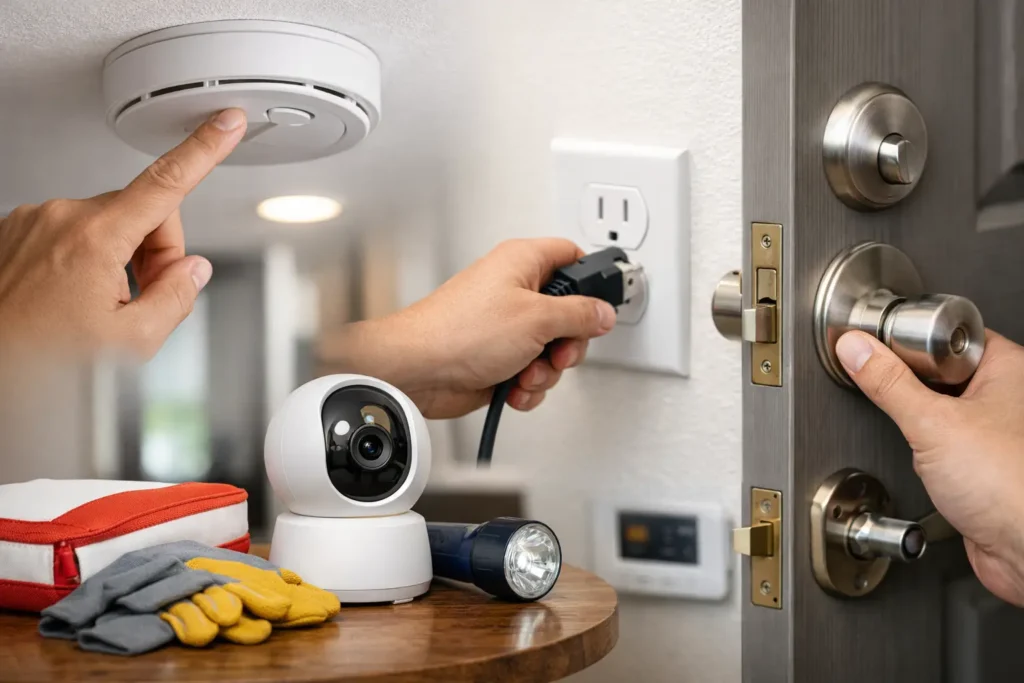
A phone charger left under a pillow, a loose rug at the top of the stairs, cleaning pods within a toddler’s reach – most home hazards are ordinary things in ordinary places. That is what makes home safety feel easy to postpone. The good news is that a safer home rarely requires a major renovation. A few thoughtful checks, better placement, and products chosen for the way your household actually lives can make a meaningful difference.
The best approach is not to buy every gadget labeled “safety.” Start with the risks that are most likely in your space: cooking, falls, fire, electricity, medication, and the particular curiosity of children or pets. Then make upgrades that are simple enough to keep using.
Start Your Home Safety Plan With Daily Routines
A safety checklist works when it fits into real life. If your mornings are a rush of lunches, backpacks, and work calls, a complicated routine will not stick. Focus on the moments when small oversights are most common: leaving the house, cooking dinner, charging devices overnight, and getting ready for bed.
Before heading out, take a quick look at the stove, candles, portable heaters, and any plugged-in styling tools. At night, keep walkways clear and make sure the route from bedrooms to bathrooms has enough light. A small motion-sensor night-light can be especially helpful for kids, guests, and anyone who does not want to switch on a bright overhead light at 2 a.m.
It also helps to give everyday items a permanent home. Keys, chargers, medications, scissors, pet supplies, and cleaning products are safer and easier to find when they are stored consistently. Organization is not just about neat shelves. It prevents the hurried searches that lead to spills, tripping, and items being left where they do not belong.
Room-by-Room Home Safety Checks
Walk through your home with fresh eyes, ideally at a time when it is busy. Notice where bags land, where cords cross a path, and what a child or pet can reach from floor level. You may spot more in ten practical minutes than you would during a full day of cleaning.
Kitchen: Keep Heat, Blades, and Chemicals Apart
The kitchen is where helpful habits matter most. Turn pot handles toward the back of the stove, keep dish towels away from burners, and never use the oven for storage. A working smoke alarm nearby is essential, but alarms are a backup, not permission to walk away from active cooking.
Store knives, sharp tools, and cleaning supplies where children cannot access them. If you use child-resistant latches, remember that they reduce access but do not replace supervision. Keep appliance cords away from the counter edge, too. A curious child can pull down a toaster, slow cooker, or coffee maker surprisingly quickly.
Grease fires require a specific response: turn off the heat if it is safe to do so and cover the pan with a metal lid. Never pour water on a grease fire. Keeping a suitable fire extinguisher accessible and knowing how to use it gives you a better option when seconds count.

Kidde Basic 110 Fire Extinguisher for Home, 1-A:10-B:C, FA110G, 2 Pack
At 2.5 lbs, it’s light enough to mount in a cabinet or on a wall without feeling like a bulky addition to the kitchen, and the pull-pin design is straightforward enough to use under pressure without extra steps. It comes with a mounting bracket, so placement near — but not directly above — the stove is easy to set up ahead of time rather than scrambling to find it in an emergency.
It’s a solid pick for anyone setting up a first line of defense in the kitchen, particularly households that don’t yet have a dedicated fire extinguisher on hand. Pairing it with a working smoke alarm nearby, as covered above, rounds out the basics.
Important: A fire extinguisher is a first-response tool, not a substitute for calling emergency services. If a fire is spreading, has reached cabinets or curtains, or you’re unsure it’s out, evacuate and call 911 rather than continuing to fight it.
Always check the extinguisher’s rating (A, B, C, K) matches the fire types common in your home, and inspect the pressure gauge periodically per manufacturer instructions. This information is provided for general awareness and does not replace training or your local fire department’s guidance.
Living Areas: Fix the Fall and Tip-Over Risks
Living rooms tend to collect charging cables, toys, blankets, and furniture that shifts over time. Secure tall bookcases, dressers, and TV stands to the wall, particularly in homes with young children who climb. Place televisions on stable stands sized for their weight, or mount them correctly according to the manufacturer’s instructions.
Rugs should lie flat with non-slip pads underneath. If a rug curls at the corner, replace it or secure it rather than hoping everyone remembers to step over it. Keep charging stations off soft furniture and away from blankets. Phones, tablets, and batteries generate heat, and damaged cables should be replaced instead of taped together for another month.

4our Kiddies Furniture Anchors(10 Pack), Furniture Straps for Baby Proofing
The straps are designed with an adjustable, detachable design, so furniture can still be pulled away from the wall for cleaning without a full reinstall each time. They’re built to work across a range of furniture types — dressers, bookcases, wardrobes, TV stands, and cabinets — which is commonly associated with making a single pack useful for a whole room rather than just one item. Installation involves anchoring into a wall stud or using the included hardware, so having a screwdriver or drill on hand makes setup more straightforward.
This is a practical pick for households doing a broader childproofing pass, especially homes with climbing toddlers or multiple tall, top-heavy pieces of furniture in bedrooms and living rooms. It’s also a reasonable option for pet owners, since cats and larger dogs can occasionally initiate the same kind of tip-over risk as a climbing child.
Note: For the strongest hold, anchors should be secured into a wall stud rather than drywall alone — independent testing has shown that anchor performance varies significantly between products and installation surfaces. Always follow the included instructions, and use at least two anchor points per piece of furniture, placed as far apart as possible.
Furniture anchors reduce tip-over risk but do not eliminate it entirely. Periodically check that anchors remain secure, especially after moving furniture for cleaning. This information is provided for general awareness and does not replace manufacturer installation instructions.
Bathrooms: Reduce Slips and Store Medication Safely
Water turns a familiar bathroom into a high-slip area. Use a bath mat with grip, wipe up puddles promptly, and consider grab bars where an older adult, someone recovering from an injury, or a young child needs extra stability. Towel bars are not designed to support body weight, so they are not a substitute.
Medications, vitamins, razors, and personal-care products should be stored out of reach and preferably in a locked cabinet if children visit or live in the home. “Natural” products are not automatically safe to ingest. The same goes for mouthwash, nail products, and colorful bath items that can look like candy to a small child.

GORILLA GRIP Bath Tub Shower Mat, Bathtub Floor Liner, 35x16 Clear
At 35×16 inches, it’s sized to cover more surface area than many standard bath mats, which is commonly associated with reducing the number of “gap” spots where a foot could land on bare, wet tub surface. The material is designed to feel soft underfoot while still providing grip, and it’s machine washable, so buildup from soap residue or mildew is designed to be easy to address without replacing the mat. The clear design is also intended to blend into most bathroom aesthetics rather than standing out as a visible safety add-on.
This is a well-regarded pick for households of any age, but it’s particularly useful where slip risk is elevated — homes with older adults, young children, or anyone recovering from an injury or surgery. It’s also a low-effort upgrade for renters, since it requires no installation or drilling, unlike grab bars or other bathroom safety modifications.
A bath mat reduces slip risk but doesn’t eliminate it. For households with limited mobility or higher fall risk, consider pairing with grab bars for added stability. This information is provided for general awareness and does not replace guidance from a healthcare provider regarding fall prevention.
Bedrooms and Hallways: Make Nighttime Movement Easier
Bedrooms should feel restful, but they also need clear paths. Avoid running cords beneath rugs or pinching them behind furniture. Leave enough space around beds to stand up safely, and use low-level lighting when a full lamp would disrupt sleep.
For nurseries, follow current safe-sleep guidance and keep cribs free from loose blankets, pillows, stuffed animals, and dangling cords. Check that furniture is anchored, window blind cords are inaccessible, and small objects are picked up from the floor. For pet owners, consider what happens when an animal settles in a dark hallway or beside a bed. A night-light can help everyone avoid a startled step.

AUVON Plug-in Night Light, Motion Sensor and Dusk to Dawn Sensor, 4 Packs
Brightness is adjustable from 1 to 50 lumens, which is commonly associated with giving households flexibility between a subtle glow for hallways and a slightly brighter setting for bathrooms or kitchens. The compact plug-in design means it doesn’t take up outlet space with cords or bulk, and the 4-pack format is designed to support placing units in multiple high-traffic spots — hallways, bathrooms, and a child’s room — from a single purchase.
This is a straightforward pick for households looking to reduce nighttime stumbling risk, particularly for families with young kids, guests unfamiliar with the layout, or anyone who prefers not to switch on a bright overhead light in the middle of the night. It’s also a reasonable low-cost addition for homes with pets that tend to move around after dark.
This is a low-voltage plug-in accessory intended for standard indoor outlets. Follow the manufacturer’s instructions for placement and avoid use in damp areas unless the product is specifically rated for it. This information is provided for general awareness and does not replace manufacturer guidance.
Fire and Electrical Safety Are Worth the Extra Attention
Smoke alarms and carbon monoxide alarms are among the least exciting purchases in a home, yet they are some of the most valuable. Install the appropriate alarms where needed, test them regularly, and replace batteries or whole units based on the manufacturer’s schedule. If an alarm chirps, address it right away. Removing a battery to stop the noise creates a dangerous gap.
Use power strips only as intended and avoid overloading outlets. High-wattage appliances such as space heaters, air fryers, microwaves, and hair tools may need their own outlet. Extension cords are best for temporary use, not permanent wiring. If outlets feel warm, lights flicker, breakers trip often, or you smell something burning, stop using the affected area and consult a qualified electrician.
Space heaters deserve their own rule: keep them on a stable, hard surface with clear space around them, and plug them directly into a wall outlet. Features such as tip-over protection and automatic shutoff are worthwhile, but they are safeguards, not a reason to leave a heater running unattended.

Kidde Hardwired Smoke & Carbon Monoxide Detector, Battery Backup, Interconnectable, LED Warning Light Indicators
The unit includes a battery backup, so it’s designed to continue functioning during a power outage rather than going silent when you may need it most. LED indicator lights are built in to show alarm status at a glance, which is commonly associated with easier troubleshooting during routine testing. Because it’s a combination unit, it’s designed to cover two of the most serious home hazards — fire and carbon monoxide — from a single device rather than requiring separate detectors mounted in the same locations.
This is a well-regarded option for homeowners doing a full-house safety upgrade, particularly in homes with existing hardwired smoke detector wiring that can accommodate an interconnected system. It’s a more involved install than a plug-in or battery-only unit, so it suits people comfortable with basic electrical work or working with an electrician, rather than those looking for the fastest possible setup.
Note: This is a hardwired unit and is not a simple battery-swap installation — it should be installed according to the manufacturer’s wiring instructions, and if you’re unsure about home electrical work, a licensed electrician is worth the cost. This information is provided for general awareness and does not replace manufacturer instructions or local fire code requirements.
Test alarms monthly and follow the manufacturer’s replacement schedule for the unit itself, not just the backup battery. This information is provided for general awareness and does not replace guidance from your local fire department or a licensed electrician.
Choose Safety Products That Solve a Real Problem
New Arrivals and smart-home devices can make safety more convenient, but the right choice depends on your household. A video doorbell may offer peace of mind for someone who receives frequent packages, while a simple door alarm may be more useful for parents of a child who tends to wander. Smart sensors can notify you about a door opening, water near an appliance, or unexpected motion. Their usefulness depends on reliable placement, clear alerts, and a plan for what you will do when one goes off.
When shopping, look beyond a long feature list. Check the intended use, installation method, battery needs, size, and whether the product works without a complicated routine. For childproofing, measure cabinets and doors before buying latches or gates. For lighting, think about brightness and location. For cameras or sensors, consider privacy settings and who will receive notifications.
A few categories are particularly useful for many households:
- Smoke and carbon monoxide alarms with clear testing and replacement instructions.
- Non-slip mats, grip strips, and motion-sensor lights for fall-prone areas.
- Cabinet latches, outlet covers, and furniture anchors for homes with young children.
- Leak sensors and water alarms near washing machines, water heaters, sinks, and basements.
At PO-Store, the goal is to make practical discovery feel simple: choose products that earn their place in your home, rather than filling a cart with items you may never install.

GoveeLife Upgraded Smart Water Leak Detector 1s with High Alarm
The 5-pack format is designed to support coverage of multiple high-risk spots at once — under sinks, behind appliances, near water heaters, and in basements — rather than relying on a single sensor and hoping it’s in the right place. When triggered, it’s built to send alerts via app push, SMS, and email, so a notification isn’t dependent on one channel working. The IP67 rating means it’s designed to withstand direct water contact, and the 5-year battery life is aimed at reducing how often you need to think about maintenance after installation.
This is a straightforward pick for households looking to add leak monitoring to the spots most prone to slow, hard-to-notice water damage — washing machines, water heaters, dishwashers, and basements. It’s especially well-suited to homes with multiple appliances or a layout where a leak could go unnoticed for a while before someone spots it visually.
A water leak sensor detects and alerts — it does not shut off water flow on its own. For homes prone to major leaks or with unattended periods (rentals, vacation homes), consider pairing with a manual or automatic shutoff valve. This information is provided for general awareness and does not replace guidance from a licensed plumber.
Make Safety a Shared Household Habit
One person should not have to remember every detail. Show older children where the meeting spot is if there is a fire alarm. Make sure adults and regular caregivers know how doors lock, where flashlights are kept, and how to turn off water or electricity in an emergency. Keep emergency contacts easy to locate, including poison control and a trusted neighbor.
If you rent, report damaged locks, exposed wiring, broken smoke alarms, or unsafe railings in writing and follow up. Home safety is still possible in a temporary space, but permanent fixes may be the property owner’s responsibility. If you own your home, add seasonal checks to your calendar: inspect outdoor steps, clean dryer vents, test alarms, and look for signs of leaks before they become costly damage.
A safer home is not one where every surface is padded and every door is locked. It is a home where the biggest risks have been noticed, the everyday paths are clear, and the people inside know what to do. Pick one room this week, make the easy fixes first, and let that small win make the next one easier.




Pingback: Non-GMO Snacks That Make Shopping Simpler | PO‑STORE