Air Purifier Versus Humidifier Explained

Air Purifier Versus Humidifier Explained

If your bedroom feels dry, your nose is irritated, and the air just seems off, it is easy to get stuck on the air purifier versus humidifier question. They are often mentioned together, sold in the same shopping categories, and marketed as air-quality upgrades. But they solve very different problems, and buying the wrong one can leave you with the same symptoms and one more appliance to clean.

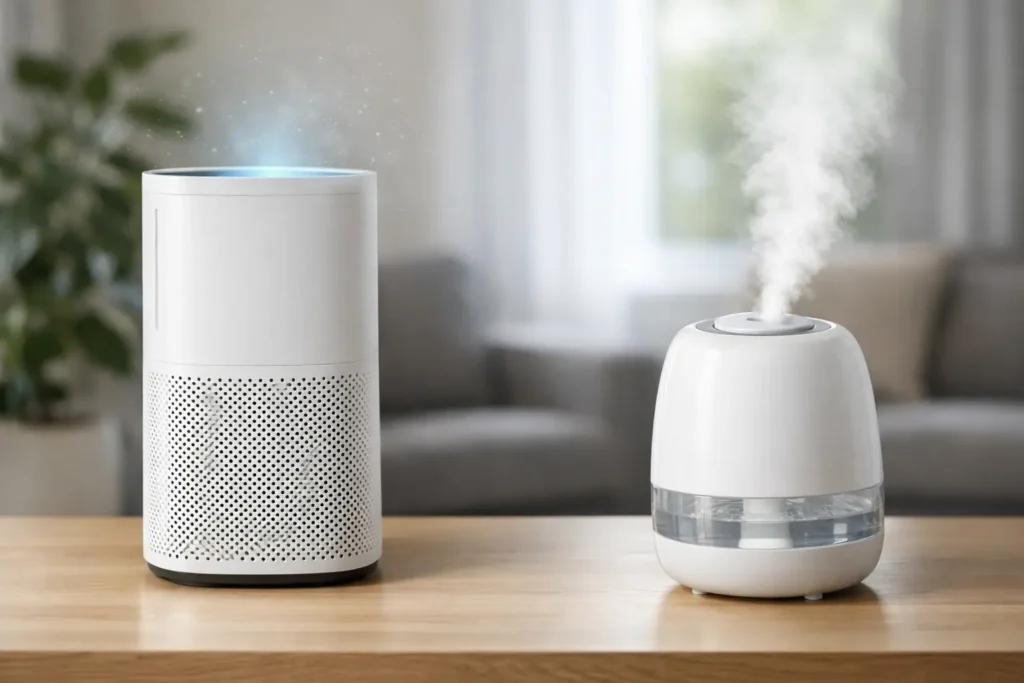
The simplest way to think about it is this: an air purifier cleans the air, while a humidifier adds moisture to it. That sounds straightforward, but real-life buying decisions are rarely that neat. Allergies, pets, winter heating, dust, snoring, eczema, and even the size of your room can change which one will help more.

Air purifier versus humidifier: what each one actually does

An air purifier is built to remove particles from the air. Depending on the filter system, that can include dust, pollen, pet dander, smoke, and other airborne irritants. If your goal is to reduce what you breathe in, this is the category you are looking at.

A humidifier does not clean the air. Its job is to increase humidity by releasing moisture into the room. That can help when indoor air gets uncomfortably dry, especially in winter or in homes that run heat for long stretches. Dry skin, chapped lips, scratchy throats, and irritated sinuses are the kinds of complaints that push people toward a humidifier.

This distinction matters because many shoppers expect one device to fix both problems. It will not. A purifier will not relieve dry air on its own, and a humidifier will not capture dust or pet hair floating around your space.

Dreo Humidifiers for Bedroom, 4L Top Fill for Large Room

Dreo Humidifiers for Bedroom, 4L Top Fill for Large Room

Why PO-Store Recommends It

We recommend the Dreo HM735S strictly for high-demand, large-space situations where you want zero-maintenance intervals. Boasting a massive 11-liter dual-tank system, this powerhouse can run continuously for up to 100 hours on its lowest setting. It uses a high-speed 3,900 RPM motor to blast an ultra-fine, 5-micrometer mist over 6 feet into the air, ensuring the moisture actually evaporates into the room's climate instead of pooling immediately onto your hardwood floors.

  • Capacity: 11.0 Liters (2.9 gallons)
  • Coverage: Up to 700 sq ft
  • Special Features: Integrated Aroma Pad, Ambient RGB Nightlight, Self-Cleaning Assist Mode


Coway Airmega AP-1512HH(W) True HEPA Purifier

Coway Airmega AP-1512HH(W) True HEPA Purifier

We recommend the Coway AP-1512HH because it is an absolute workhorse that consistently outperforms units twice its price in real-world smoke and pollen testing. It pairs a certified True HEPA filter with a hyper-intelligent Eco Mode. Once its built-in particle sensor tracks clean air for 30 consecutive minutes, the unit automatically shuts down its fan completely to save power, waking itself back up only if ambient pollution levels spike.

  • Coverage: Up to 361 sq ft (AHAM verified) / up to 1,748 sq ft in 1 hour
  • Filtration: 4-Stage (Washable Pre-filter, Odor Carbon, True HEPA, Vital Ionizer)
  • Key Feature: Automated Eco-Mode energy saver, real-time LED air quality index


Which one should you buy first?

Start with the problem you are actually trying to solve, not the product trend you keep seeing online.

If your main issue is allergies, pet dander, wildfire smoke, or a room that feels dusty no matter how often you clean, an air purifier usually makes more sense. It targets airborne particles, which is where a lot of respiratory irritation starts. People with asthma often lean this way too, although the right setup depends on the trigger.

If the air in your home feels painfully dry, you wake up congested, your skin gets flaky, or your throat feels rough after sleeping, a humidifier is usually the better first buy. Dry indoor air is common in colder months, and adding moisture can make a room feel noticeably more comfortable.

There is also a middle ground. Some homes need both. A house can have dry heated air and still be full of dust, pollen, or pet dander. In that case, choosing between them is less helpful than deciding which issue is bothering you more right now.

When an air purifier is the better investment

Air purifiers tend to be the better buy for households focused on breathing comfort and allergen control. If you have pets, live near traffic, deal with seasonal allergies, or notice odors and fine dust collecting quickly, this type of device often delivers more obvious results.

A good purifier can help a bedroom feel fresher, especially overnight. Many people notice fewer allergy symptoms in the morning, less visible dust on surfaces, and less lingering odor from cooking or pets. That said, performance depends heavily on the filter type, room coverage, and how often you replace filters. A low-quality unit in a large room can feel like money wasted.

There is also a practical cost issue here. Air purifiers often have higher long-term maintenance because filters need replacing. If you want cleaner air but do not plan to keep up with filter changes, the benefits drop off fast.


LEVOIT Air Purifier for Home Allergens

LEVOIT Air Purifier for Home Allergens

Why PO-Store Recommends It

We recommend the Levoit Core 300-P as our best bang-for-your-buck option for small-to-medium rooms like offices and bedrooms. Packed with a hefty 45 grams of granular carbon inside its 3-stage cylindrical filter (a huge step up from the thin, sprayed mesh filters typical at this price point), it scrubs out stagnant cooking smells, pet odors, and wildfire smoke faster than anything else in its weight class. It packs a dedicated child lock and an ultra-quiet sleep mode directly onto its clean touchscreen face.

  • Coverage: Optimal up to 220 sq ft / handles up to 1,073 sq ft in 1 hour
  • Filtration: 360° Pleated 3-in-1 (Pre-filter, True HEPA-grade, ARC Formula Carbon)
  • Weight: 7.5 lbs (Highly portable tabletop profile)


LEVOIT Classic300S Ultrasonic Smart Top Fill Humidifier

LEVOIT Classic300S Ultrasonic Smart Top Fill Humidifier

Why PO-Store Recommends It

We back the Levoit Classic 300S because it completely solves the two biggest headaches of bedroom humidifiers: painful refilling and guessing your humidity levels. The true top-fill design means you can walk up with a pitcher and pour water straight into the top—no flipping or balancing a slippery tank in your bathroom sink. Plus, its built-in humidistat syncs with the VeSync app to automatically turn off the machine when your room hits your ideal target, saving your drywall from turning into a swamp.

  • Capacity: 6.0 Liters (1.58 gallons)
  • Coverage: Up to 505 sq ft
  • Control Methods: VeSync Mobile App, Voice Control (Alexa/Google), On-unit Touchscreen

When a humidifier makes more sense

Humidifiers are best when comfort is the issue, not airborne particles. Dry homes can make winter feel worse than it needs to. Heated indoor air often pulls moisture out of the environment, and your body notices. Skin dries out, nasal passages get irritated, and sleep can become less comfortable.

A humidifier can make a bedroom feel less harsh overnight, which is why parents often buy them for kids’ rooms and adults use them during cold and flu season. They can also help people who wake up with a dry mouth or nose, especially when forced-air heat is running every night.

But there is a trade-off. Too much humidity creates a different problem. It can make a room feel clammy and may encourage mold or mildew if levels climb too high. That is why humidifiers work best when used with some restraint, ideally with awareness of room humidity rather than just running constantly.

Air purifier versus humidifier for allergies, sleep, and dry skin

This is where the comparison gets more personal.

For allergies, an air purifier is usually the stronger choice because it addresses common triggers like pollen, dust, and pet dander. A humidifier may make your nose feel less dry, but it does not remove what is causing the allergic reaction in the first place.

For sleep, either one could help depending on what is disrupting you. If congestion is linked to dry air, a humidifier may improve overnight comfort. If sleep is affected by dust, pet dander, or general air stuffiness, an air purifier is often the better fit.

For dry skin, a humidifier is the obvious winner. An air purifier does not add moisture back into the room, so it will not fix that tight, dry feeling you get in colder months.

For babies and kids, many parents assume a humidifier is always the answer. Sometimes it is, especially in a dry nursery. But if the room also collects dust or the child is sensitive to allergens, a purifier may be just as useful. The right answer depends on the room, not just the age of the person using it.


Can you use both together?

Yes, and in some homes that is the smartest setup.

Using both can make sense if you want cleaner air and better moisture balance at the same time. A purifier can help remove airborne irritants, while a humidifier keeps the room from feeling overly dry. For people dealing with winter allergies, pets, or dry indoor heat, the combination can feel like a real upgrade.

You do need to manage them properly. A humidifier that is not cleaned regularly can release unwanted particles or encourage microbial growth, which works against the whole point of improving your air. And a purifier still needs regular filter changes to stay effective. Buying both only pays off if you are willing to maintain both.

What shoppers get wrong before buying

The biggest mistake is shopping by broad claims like better air or healthier home. Those phrases sound helpful, but they blur the difference between cleaning air and adding moisture.

Another common mistake is ignoring room size. A compact purifier may be fine for a small bedroom but underpowered for an open living room. The same goes for humidifiers. If the output is too low for the space, you may barely notice a change.

Noise is another factor people underestimate. If the device is going in a bedroom or home office, sound matters. Some units are quiet enough for sleep, while others are distracting on higher settings.

Maintenance is the last reality check. Humidifiers need cleaning more often than many buyers expect. Air purifiers need replacement filters, and those costs add up over time. The best device is the one you will actually use and maintain consistently.

The smarter way to decide

If you are choosing between the two, ask a simple question: is the problem in the air, or is it the air itself?

If the problem is particles like dust, smoke, pollen, and pet dander, go with an air purifier. If the problem is dryness that is affecting your skin, throat, or sinuses, choose a humidifier. If both descriptions sound familiar, your home may benefit from both, just not necessarily all at once.

At PO-Store, we tend to favor products that solve a specific problem clearly rather than promise everything. That is the right mindset here too. Match the device to the symptom, pay attention to room size and upkeep, and you are far more likely to end up with something that improves daily life instead of becoming shelf clutter.

The best pick is not the more advanced machine or the one with the louder marketing. It is the one that fixes the issue you feel every day when you walk into the room.

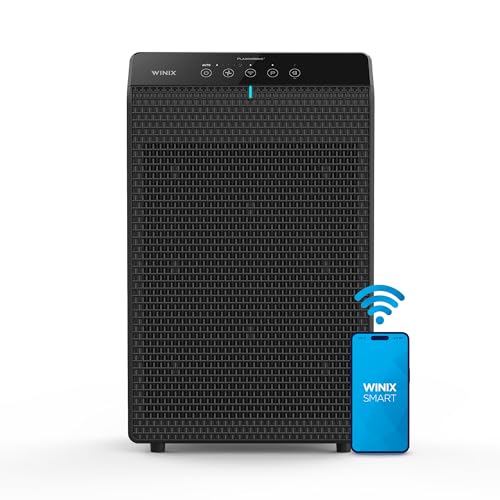
WINIX 5520 Air Purifier for Home Large Room

WINIX 5520 Air Purifier for Home Large Room

Why PO-Store Recommends It

We recommend the Winix 5520 as a sleek, highly space-efficient option for large rooms where you want powerful air circulation without a massive appliance taking over the corner. It manages to pack a 4-stage purification system—featuring a washable pre-filter, advanced odor control carbon, and a True HEPA filter—into a significantly smaller, more compact footprint than older legacy console designs. It supports full Wi-Fi app connectivity and uses an on-board smart gas sensor to actively track volatile organic compounds (VOCs) and cooking odors, scaling its fan speed automatically to clear the air.

  • Coverage: Up to 392 sq ft (AHAM verified) / up to 1,882 sq ft in 1 hour
  • Filtration: 4-Stage (Washable Fine-Mesh Pre-filter, Advanced Odor Control Carbon, True HEPA, PlasmaWave Technology)
  • Smart Ecosystem: Winix Smart App control, automated smart sensor tracking
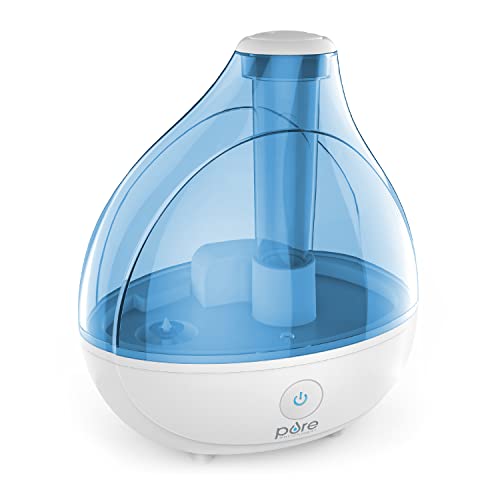

Pure Enrichment MistAire Ultrasonic Cool Mist Humidifier

Pure Enrichment MistAire Ultrasonic Cool Mist Humidifier

Why PO-Store Recommends It

We recommend the Pure Enrichment MistAire if you want a dirt-cheap, hyper-portable staple for localized, personal relief. It strips away all confusing apps, Wi-Fi connections, and smart sensors in favor of a dead-simple, one-button manual interface. It takes up almost zero space on a desk or nightstand, operates in near-total silence, and features a 360-degree rotating nozzle so you can direct the mist stream exactly where you need it.

  • Capacity: 1.7 Liters (0.45 gallons)
  • Coverage: Up to 250 sq ft
  • Interface: Single-button touch control (Low, High, Nightlight Toggle)


2 thoughts on “Air Purifier Versus Humidifier Explained”

  1. Pingback: Amazon Prime vs Walmart Plus: The Honest 2026 Comparison | PO‑Store

  2. Pingback: Air Purifier for Pets Guide: What to Buy | PO‑STORE

Leave a Comment

Your email address will not be published. Required fields are marked *

Scroll to Top
MUSE 2: Smart Meditation Headband

MUSE 2: Smart Meditation Headband

These devices track signals related to brain activity and pair them with an app that offers real-time audio cues, which can keep data-driven users deeply engaged.

Why PO-Store Recommends It: The Muse 2 Premium Subscription Bundle acts as a personal meditation coach by using advanced EEG brain sensors to give you immediate auditory feedback on your focus level. It is a highly motivating tool that translates the vague feeling of meditation into clear, trackable progress metrics over time.