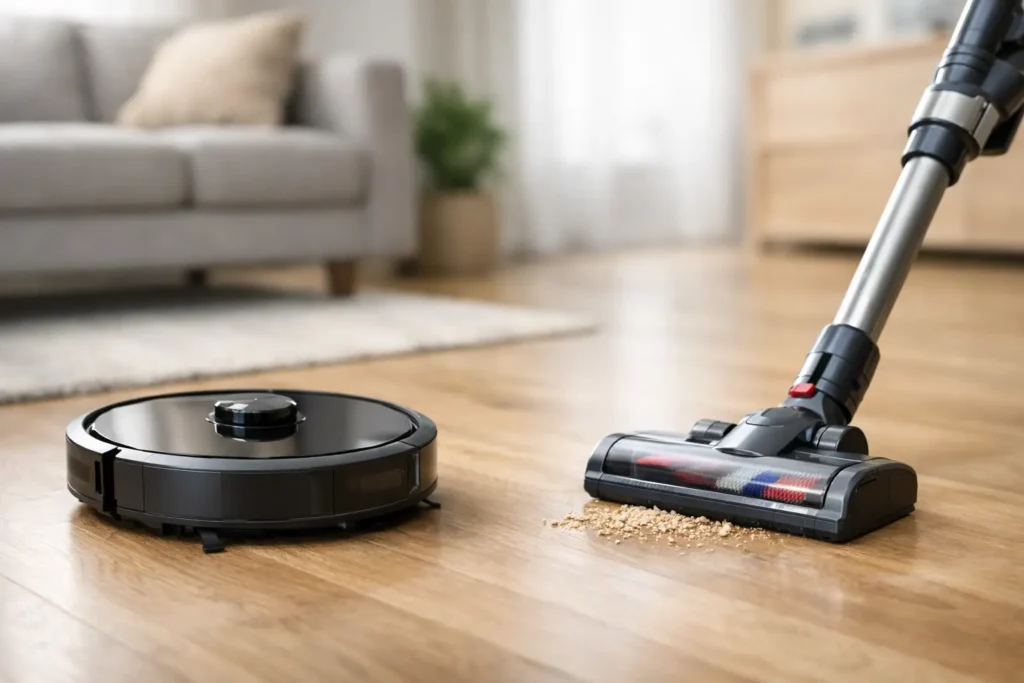
A clean floor at 7 a.m. before the workday starts feels very different from remembering to vacuum after dinner. That is the real choice behind a robot vacuum vs cordless vacuum: do you want cleaning handled automatically, or do you want the strongest possible tool ready when you are? Both can make home upkeep easier, but they solve different problems.
A robot vacuum is designed to reduce the number of times you need to think about floors. A cordless vacuum is designed to help you clean thoroughly and quickly when messes happen. The better purchase depends less on which machine has more features and more on your home, your flooring, and how you actually live in the space.
Robot Vacuum vs Cordless Vacuum at a Glance
Robot vacuums win on consistency. They can run on a schedule, move under beds and sofas, and keep dust and pet hair from becoming a weekend project. Higher-end models map rooms, avoid common obstacles, empty themselves into a base, and may mop hard floors as well.
Cordless vacuums win on control and cleaning intensity. You direct the vacuum exactly where it needs to go, from a pile of cereal beneath the table to crumbs in the car or dust on the stairs. Most also convert into handheld units, giving them a wider range of uses than a floor-focused robot.
If you can only buy one, think of a robot as a maintenance cleaner and a cordless as a full-service cleaner. A robot can keep a home looking presentable between deeper cleans. A good cordless can handle both daily spills and a more deliberate whole-home vacuuming session.
Choose a Robot Vacuum if Routine Is Your Biggest Problem
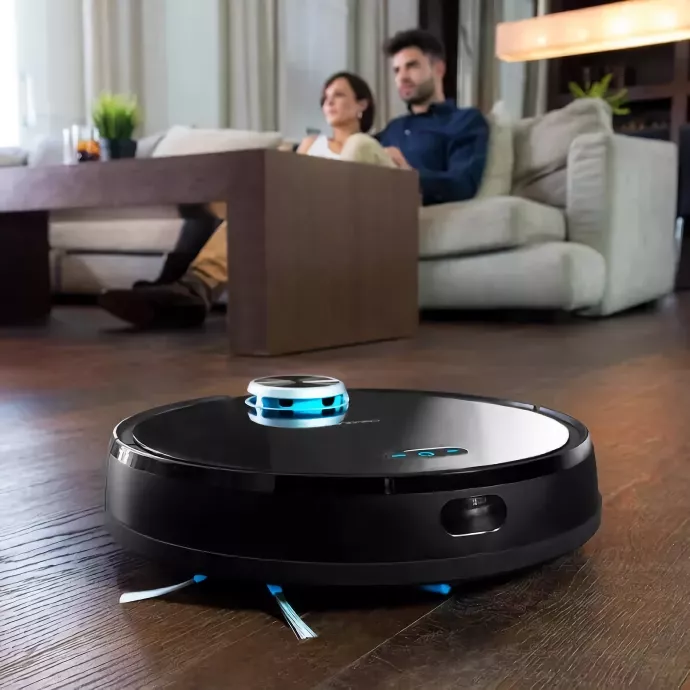
A robot vacuum makes the strongest case for busy households, pet owners, and anyone who knows they will not pull out a vacuum three times a week. Set it to run while you are at work, on school pickup, or making dinner, and it turns a neglected chore into background maintenance.
This matters most in homes with hard flooring, low-pile rugs, and open pathways. Robots are particularly good at collecting the fine dust, hair, and debris that appear every day but rarely feel urgent enough to clean immediately. If shedding pets are the main issue, frequent robot runs can noticeably reduce fur tumbleweeds along baseboards and under furniture.
The best part is not that a robot delivers a perfect deep clean. It is that it prevents ordinary buildup. That can make your home feel cleaner more often with very little effort from you.
There are limits. Robot vacuums need accessible floors. Cords, socks, pet toys, charging cables, and fringe-heavy rugs can interrupt a cleaning run, especially on less advanced models. Object avoidance has improved, but it is not a reason to leave clutter everywhere and expect flawless results.
They also struggle with certain layouts. Multi-level homes require carrying the robot between floors unless you buy separate units. Thick carpeting, high thresholds, crowded rooms, and lots of furniture legs can reduce coverage or leave the robot stuck. Even models with self-emptying docks still need occasional maintenance, including brush cleaning, filter replacement, and bin or bag changes.
PO-Store Smart Robotic Vacuum Cleaner with Visual Navigation, Powerful Suction & Smart Home Mop

Product Highlights
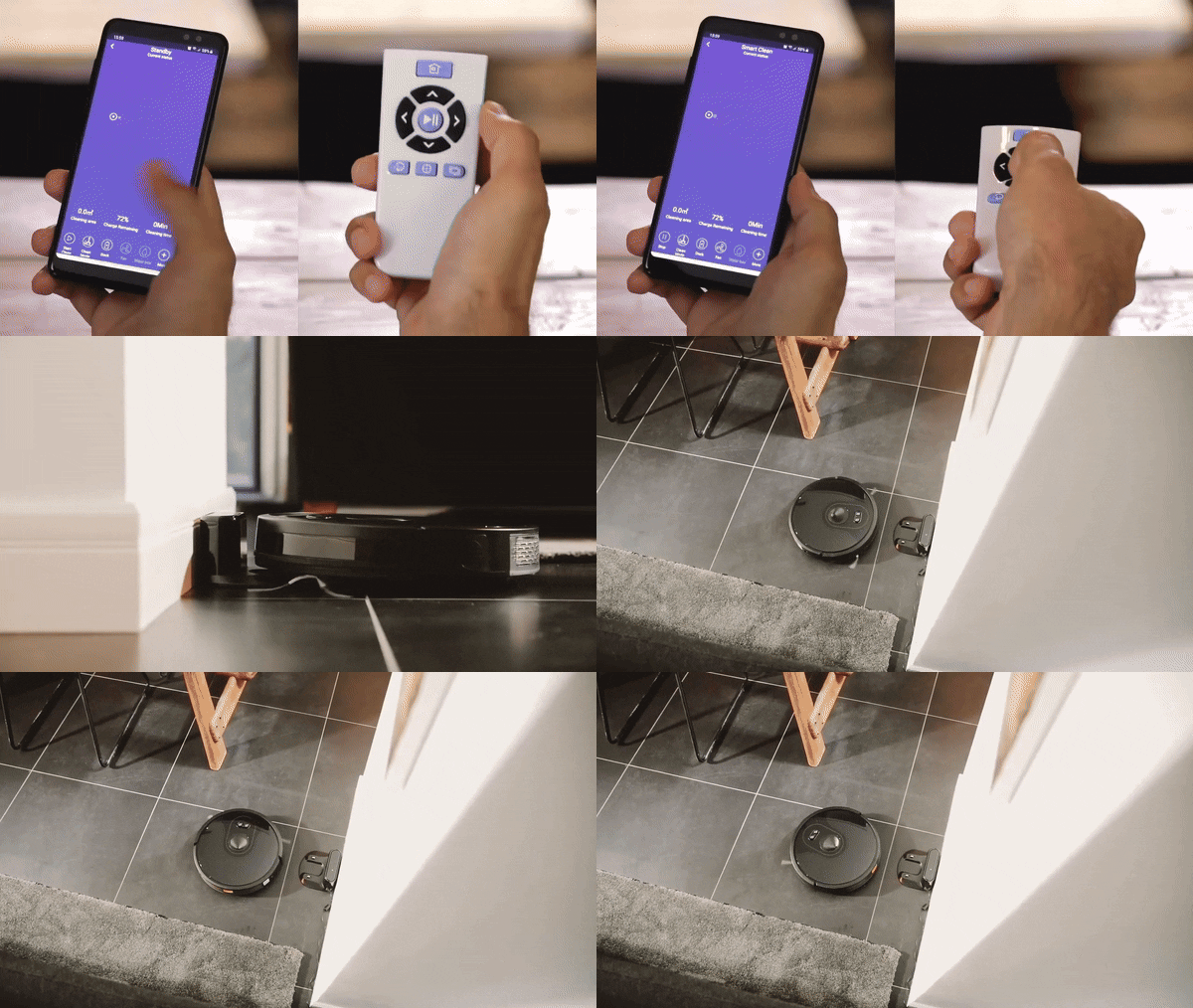
- Triple Navigation System for unmatched cleaning paths and efficiency.
- Powerful 6000PA suction for deep cleaning on all surfaces.
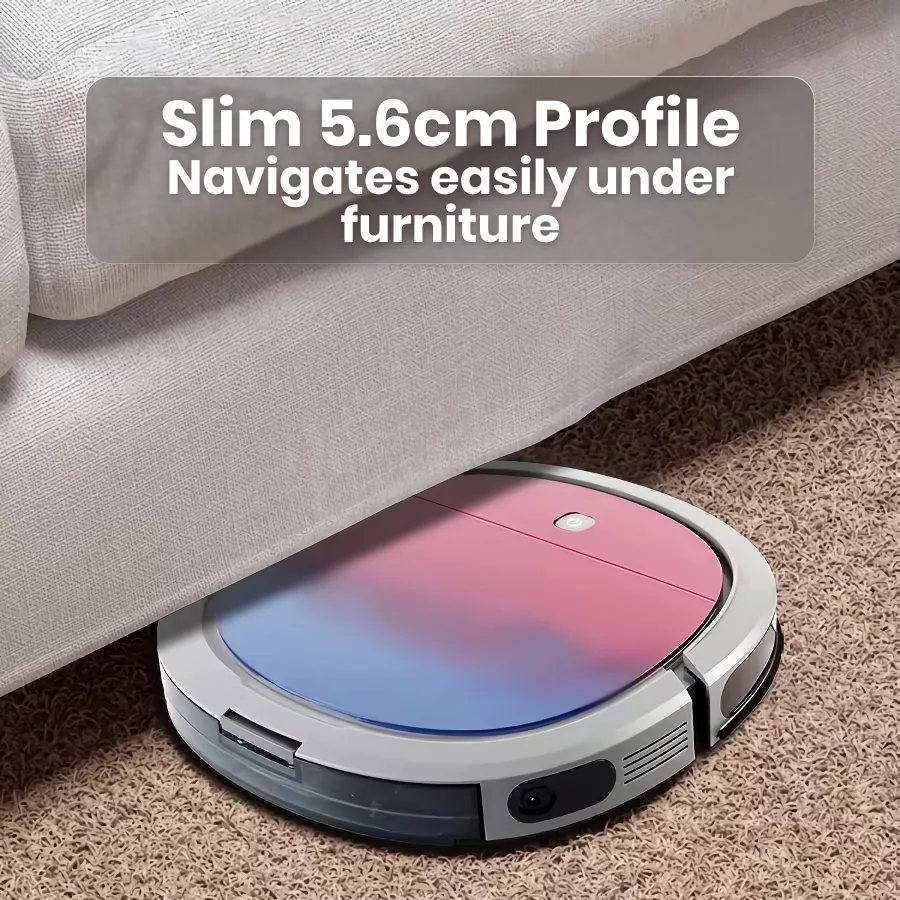
- Low-profile design ensures cleaning under most furniture with ease.
- Smart app controls allow for customizable cleaning zones and virtual barriers.
- Large capacity dustbin and water tank for extended cleaning sessions without interruptions.
- Supports sweeping and mopping, offering a comprehensive clean for your home.
- Intelligent voice control compatibility with Alexa, Google Home, and more.
The robot vacuum features worth paying for
Navigation and mapping matter more than a long list of app settings. A robot that reliably learns your rooms, avoids stairs, returns to its dock, and cleans without getting trapped will be far more useful than one with impressive specifications but erratic movement.
For homes with pets, look for strong hair pickup, a tangle-resistant brush design, and dependable obstacle detection. For hard floors, a mopping function can be useful, but treat it as a light-maintenance feature rather than a replacement for an occasional manual mop. A self-emptying dock is a meaningful upgrade for allergy-conscious households and anyone who wants the least hands-on experience.
Choose a Cordless Vacuum if You Want a Cleaner, Faster Reset
Cordless vacuums are built for the moments robots cannot handle well: a knocked-over snack, stairs that need attention, debris in the entryway, upholstery that collects pet hair, and the narrow gap between the washer and wall. Their convenience comes from immediate access. There is no setup, no scheduling, and no need to clear a route first.
They are also usually the better choice for carpets. A quality cordless stick vacuum with a motorized floor head can agitate carpet fibers and pick up embedded dirt more effectively than many robot vacuums. That difference is especially noticeable on medium- or high-pile carpet, in homes with active kids, or where pets track in grit from outside.
A cordless vacuum gives you a more complete clean because you are present to notice what needs extra attention. You can make several passes over the rug, use a crevice tool at the baseboards, clean the couch, and vacuum the stairs in one session. That flexibility is hard for a robot to match.
The trade-off is simple: you still have to vacuum. A lightweight cordless model lowers the barrier significantly, but it cannot create the same hands-off routine as a robot. If your current vacuum mostly stays in a closet because it is bulky or inconvenient, a cordless model may be the upgrade that finally changes your cleaning habits.
What to check before buying a cordless model
Battery life deserves a realistic look. Many cordless vacuums advertise long runtimes, but the highest suction setting and motorized attachments can shorten that time considerably. For a larger home, choose a model with a removable battery, an extra battery option, or enough real-world runtime to finish your main areas without rushing.
Weight matters too. A vacuum may feel manageable for a quick kitchen pass but tiring when used overhead, on stairs, or across several rooms. Check how easily the dustbin empties, whether the floor head handles hair tangles, and which tools are included. A useful crevice attachment and upholstery tool may add more everyday value than an app or display screen.
Cleaning Performance: Where Each Vacuum Has the Edge
For daily dust, crumbs, and visible pet hair on hard floors, a robot vacuum can be surprisingly effective because it cleans frequently. Its results compound over time. Floors that are vacuumed every day or every other day tend to stay ahead of the mess.
For deep carpet cleaning, corners, edges, stairs, furniture, and sudden spills, the cordless vacuum has the clear advantage. It offers targeted suction and allows you to respond immediately. Robots are getting better at edge cleaning and carpet detection, but their compact size and autonomous movement still limit the pressure and precision they can apply.
Noise can shape your decision as well. A robot runs longer, but you can schedule it when the house is empty. A cordless is louder while you use it, though the cleaning session may take only 10 to 20 minutes. Apartment dwellers and households with napping children may appreciate having control over exactly when that noise happens.
Cost, Maintenance, and the Value of Less Work
Entry-level robot vacuums and cordless vacuums can overlap in price, but premium robot systems often cost more because they include mapping sensors, docks, mopping hardware, and automation features. Replacement bags, filters, brushes, and mop pads can add to long-term ownership costs.
Cordless vacuums have their own ongoing expenses, including filters, brush rolls, and eventually batteries. Still, they tend to be simpler machines. There are fewer navigation sensors, no docking route to troubleshoot, and generally less software dependence.
The best value is not always the less expensive model. It is the one that fits into your routine often enough to earn its place. A $300 cordless vacuum that you use four times a week can be a better investment than a feature-packed robot that constantly gets stuck under a chair. The reverse is true if your schedule makes manual vacuuming unrealistic.
Is Buying Both Worth It?
For larger homes, pet-heavy homes, or households that want consistently tidy floors, a robot and cordless vacuum can work exceptionally well together. Let the robot handle scheduled maintenance across the main floor, then use the cordless for stairs, upholstery, deep carpet work, corners, and spot cleaning.
That said, buying both is not necessary for everyone. A small apartment with mostly hard floors may get the greatest benefit from a reliable robot. A home with multiple stories, thick carpet, lots of clutter, or frequent small messes may be better served by a cordless vacuum first.
Before spending more, picture a typical Tuesday rather than an idealized cleaning day. If you need help staying ahead of dust, choose automation. If you need a powerful tool that can reach every mess you see, choose the cordless. The right vacuum is the one that makes clean floors feel easier to keep, not another device that asks for more attention than it saves.