

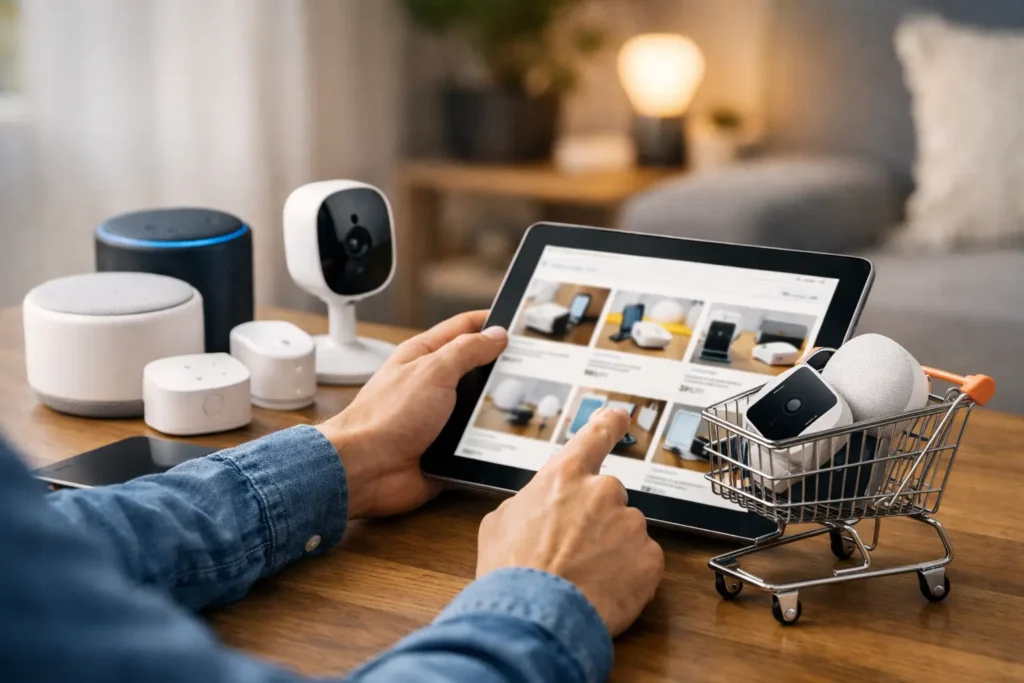
A smart plug marked down by 40% can be a great buy – or a forgettable gadget that ends up in a drawer three weeks later. That is the real challenge with weekly smart home
For most shoppers, the problem is not finding
What weekly smart home deals are actually worth watching
The best weekly discounts usually show up in categories people use every day. Smart bulbs, plugs, video doorbells, indoor cameras, robot vacuums, thermostats, air purifiers, and voice assistants tend to rotate through promotions often. That is good news for buyers because it means patience usually pays off. If a product category gets discounted regularly, there is less pressure to rush.
Still, not every category offers the same kind of value. A sale on a smart thermostat can have long-term payoff if it helps reduce heating and cooling waste. A price cut on a robot vacuum can save time every week if your household has pets, kids, or heavy foot traffic. By contrast, some novelty devices look impressive on sale but do not solve a real problem. Smart shopping starts with usefulness, not features.
There is also a timing issue. Some weekly promotions are genuinely strong because retailers are clearing inventory before a newer model lands. Other times, the discount is minor and dressed up to feel urgent. A product with a $10 drop is not automatically a deal if it has hovered around that price for months. Context matters.
How to judge weekly smart home deals like a careful buyer
A good deal has three parts: the price is competitive, the product is reliable, and the device fits your setup. If one of those is missing, the value drops fast.
Start with the job you want the device to do
This sounds obvious, but it is where many bad purchases begin. Before you compare brands or sale prices, decide what problem you are trying to solve. Do you want to automate lights when you get home? Keep an eye on package deliveries? Cut down on vacuuming? Improve bedroom air quality?
Once the job is clear, it becomes much easier to ignore products that are cheap but unnecessary. A discounted smart display is not helpful if you really need a basic video doorbell. A bundle with five color-changing bulbs is not a bargain if you only want one lamp on a schedule.
Check compatibility before the price tags pull you in
Smart home products do not live in isolation. They need to work with the ecosystem you already use, whether that is Alexa, Google Home, Apple Home, or a mix of platforms. Some devices also depend on a hub, a specific app, or a stronger Wi-Fi setup than shoppers expect.
This is where a lot of deal excitement falls apart. A door lock can be heavily discounted and still be the wrong purchase if it does not work with your phone, your voice assistant, or your existing smart routines. The same goes for lighting systems, cameras, and sensors. A lower price does not make incompatibility less annoying.
Look past the discount percentage
Retailers love large percentages because they make
In some categories, the better move is buying the stronger product with a smaller discount. A well-rated indoor camera with reliable motion alerts and solid app support is usually a better investment than the cheapest model with inconsistent notifications and poor privacy controls. This is especially true for devices you will depend on daily.
The smart home categories where deals matter most
Not every smart home item deserves the same level of deal hunting. Some are worth waiting for. Others are affordable enough that the difference is minor.
Security and monitoring devices
Video doorbells, outdoor cameras, and indoor cameras often see frequent promotions. These are worth watching closely because feature gaps matter. Better night vision, faster alerts, cleaner app design, and more stable connectivity can make a major difference in daily use. A budget camera is not a bargain if it misses motion events or buries key features behind extra fees.
For security products, pay attention to subscription costs as much as sale prices. A lower upfront price can look great until cloud storage, person detection, or event history adds a monthly charge. Sometimes the better weekly smart home
Cleaning and comfort devices
Robot vacuums, smart air purifiers, and thermostats can deliver some of the most practical value. These are not just tech purchases. They affect how your home feels and how much work you do each week.
Robot vacuum
Thermostats and air quality devices are more dependent on your home itself. A thermostat deal is compelling if your HVAC system supports it and you are likely to use scheduling features. An air purifier deal makes sense if room size and filter replacement costs line up with your space and budget.
Lighting and automation basics
Smart plugs and bulbs are often the easiest entry point, and weekly promotions here can be genuinely useful. They are relatively low risk, simple to set up, and easy to build into routines. For many households, they deliver the fastest payoff because they save time and add convenience without much learning curve.
That said, this is also where overbuying happens. Multipacks are tempting, but only worthwhile if you already know where they will go. Buying eight discounted smart bulbs without a plan is how small deal wins turn into clutter.
How to avoid common deal mistakes
The biggest mistake is buying for the future version of your home instead of the one you live in now. It is easy to imagine a fully automated setup with schedules, scenes, sensors, and voice controls. In reality, most people get the best results from a few reliable devices they use consistently.
Another common mistake is underestimating setup friction. Some products are plug-and-play. Others require stronger Wi-Fi coverage, extra accessories, or more troubleshooting than expected. If convenience is the whole point, a cheaper device with a frustrating setup can cost you more in time and patience than it saves in dollars.
There is also the issue of brand support. Smart home devices are software-dependent, which means app quality, updates, and customer service matter long after checkout. Unknown brands can post aggressive sale prices, but if the app is unreliable or support disappears, the deal can age badly. That is one reason curated recommendation platforms like PO-Store matter – they help narrow the field to products worth considering before the sale banner ever appears.
A better way to shop weekly smart home deals
The most effective approach is simple: keep a short list, know your price target, and wait for the right fit. If you know you want a video doorbell, a robot vacuum, or a few smart plugs, you can track those categories without getting distracted by every new markdown.
It also helps to think in terms of household impact. Ask which device will save the most time, reduce the most friction, or improve comfort the most. That question cuts through a lot of marketing noise. A smart home product does not need to be flashy to be worth buying. Often, the best ones are the least exciting on paper and the most useful in practice.
Deal shopping works best when you stay a little skeptical. The sale should support a good decision, not create one. If a product is compatible, well-reviewed, fairly priced, and suited to your routine, that is when a weekly promotion becomes genuinely worth acting on.
A smart home should feel simpler after you buy something, not more complicated. If a deal gets you closer to that, it is probably the right one to watch.
