

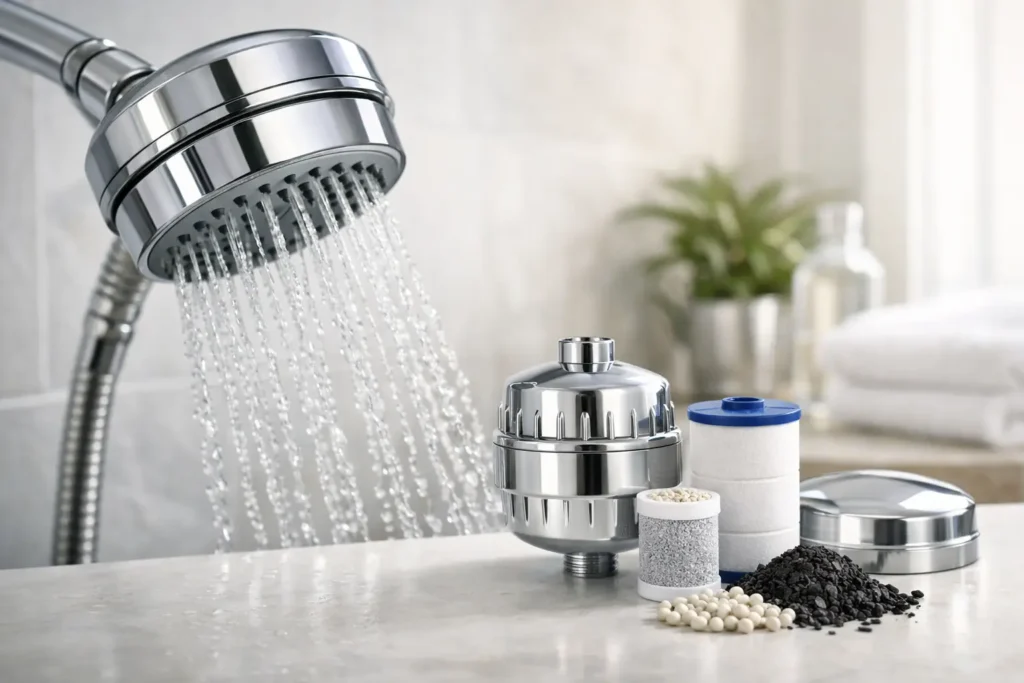
A shower filter can be a small bathroom upgrade with a very noticeable daily payoff – but only when it addresses something actually present in your water. If you are figuring out how to choose shower filter options, skip the flashy claims first. Start with your water source, the concerns you want to solve, and the maintenance you are willing to keep up with.
A good filter may reduce the chlorine smell that follows you out of the shower, help hair feel less stripped, or make a dry-skin routine more comfortable. It will not turn every shower into purified drinking water, fix hard-water scale on its own, or replace a whole-house treatment system. Knowing that difference makes it much easier to spend wisely.
Start With What Is in Your Water
Your home’s water source sets the direction. Most US households on municipal water receive a disinfected supply, commonly treated with chlorine or chloramine. Chlorine can create a noticeable pool-like odor and may be irritating for some people, especially those with dry or sensitive skin. Chloramine is a more stable disinfectant made from chlorine and ammonia, and it can be harder for some shower filters to reduce effectively.
If you have city water, check your local utility’s annual water quality report. It will not tell you everything about your specific pipes, but it can confirm whether chlorine or chloramine is used and flag broader concerns worth investigating. If the water smells strongly of chlorine, that is a practical clue, too.
Well water is a different case. It can contain minerals, iron, sediment, sulfur compounds, or microbial concerns depending on the area and the well. A standard shower filter is often the wrong first tool for these issues. For example, a sulfur smell or orange staining points to a problem that may need dedicated water testing and treatment, not a showerhead attachment.
Hard water deserves special attention because it is one of the most misunderstood reasons people shop for shower filters. Hardness comes from calcium and magnesium. Many shower filters can improve the shower experience, but they do not truly soften water in the way an ion-exchange water softener does. If your faucets collect white scale quickly and your glass shower door is constantly cloudy, look for a solution designed for hardness rather than expecting a compact filter to do it all.
How to Choose a Shower Filter by Your Main Goal
The best product for you depends on what you want to notice after installation. Be specific. “Better water” is too broad to compare products meaningfully.
For chlorine odor, dry-feeling skin, or hair that feels rough after washing, prioritize a filter that clearly states chlorine reduction and explains the media it uses. Activated carbon is widely used for chlorine, though its performance can be affected by hot water and fast flow. KDF media, often made with copper-zinc granules, is another common option in shower filtration. Some models combine multiple media to target chlorine, sediment, and other shower-water concerns.
For chloramine-treated water, read the claims more carefully. Do not assume that a filter designed for chlorine automatically performs the same way on chloramine. Brands should be clear about what the filter has been tested to reduce and under what conditions. Vague phrases such as “removes toxins” or “purifies everything” are not useful buying information.
For sediment, such as visible particles after plumbing work or in an older home, choose a unit with a sediment screen or pre-filter. Keep in mind that a filter catching more material will need more frequent replacement. This is not a flaw – it is the filter doing its job – but it should fit your household’s maintenance habits.
If your goal is mainly a more comfortable shower for sensitive skin, fragrance-free personal-care products and reasonable water temperature still matter. A shower filter can be one helpful part of that routine, not a guaranteed cure for eczema, rashes, or other skin conditions. Persistent symptoms belong in a conversation with a healthcare professional.
Check the Claims, Not Just the Marketing
A reliable shower filter listing should tell you what it reduces, how long the cartridge lasts, the flow rate, and the replacement schedule. Those basics are more valuable than a long list of unverified benefits.
Third-party certification can add confidence, but the details matter. Look for a certification or test result tied to a specific contaminant reduction claim, not merely a statement that materials are safe or that a component meets a general standard. If a product references an NSF or ANSI standard, check whether it applies to the complete shower filter and the exact claim being made. Certification does not mean a filter removes every substance from water.
Also pay attention to the testing conditions. Filter performance can vary with water temperature, pressure, chlorine level, and cartridge age. A claim based on a brand-new cartridge at a low flow rate may not reflect every real-world shower. That does not make the product useless. It means you should treat dramatic percentage claims as one part of the decision, not the whole decision.
Choose the Right Format for Your Bathroom
Shower filters generally come in two practical styles: an inline filter that sits between the shower arm and your existing showerhead, or a filtered showerhead with the filter built in. The right choice is usually about flexibility rather than performance alone.
An inline model makes sense when you already love your showerhead, use a handheld setup, or want the freedom to change showerheads later. It adds some height and bulk, so measure the clearance if your showerhead is already close to the ceiling. It also gives you more choice in spray pattern and flow style.
A filtered showerhead is simpler and often looks cleaner. It can be a good choice for renters or anyone replacing an old fixture anyway. The trade-off is that the filter, showerhead, and spray experience are tied together. When the showerhead is not a fit, you may need to replace more than just the filtration component.
Before buying either style, confirm the connection type. Most US showers use a standard 1/2-inch threaded connection, but unusual fixtures, fixed rain heads, and certain handheld systems may need an adapter or may not be compatible. Check whether the package includes washers, plumber’s tape, or any special installation parts.

Explore Our Top Shower Filter Picks Below


Do Not Ignore Flow Rate and Water Pressure
A filter that reduces your shower to a weak trickle is unlikely to stay installed for long. Showerhead flow is regulated in the US, but actual pressure also depends on your plumbing, building, and fixture. Adding a filter can slightly change the experience, especially as the cartridge collects sediment.
If you already have low pressure, choose a model designed to maintain flow and avoid overly restrictive multi-stage setups unless the brand provides clear performance information. If you have strong pressure, a quality filter should still deliver a comfortable, even spray. Reviews can help reveal whether a product leaks, whistles, or loses pressure quickly, but prioritize patterns across many buyers over one unusually glowing or negative comment.
Price the Replacement Cartridges Before You Buy
The shower filter itself is only the entry cost. Replacement cartridges are the ongoing expense, and they are where a bargain purchase can become frustrating. A lower-priced unit that needs frequent proprietary cartridges may cost more over a year than a slightly pricier model with longer-lasting replacements.
Most cartridges are changed every few months, but the real interval depends on local water quality, household size, shower frequency, and the filter’s capacity. A single person in a low-sediment area may get longer use than a family of four. Set a calendar reminder when you install the first cartridge. Waiting until the water smells bad again means you have likely gone past the ideal replacement point.
Look for replacements that are easy to find and straightforward to install. If a brand makes it difficult to identify the correct cartridge or does not publish the expected replacement cost, consider that a warning sign. Convenience is part of long-term value.
A Practical Pre-Purchase Check
Before checking out, make sure the filter matches your water treatment goal, fits your shower setup, and has replacement cartridges you can realistically afford. Then ask one final question: what result would make this purchase worthwhile?
Maybe it is less chlorine odor on your skin after a late workout. Maybe it is hair that feels more manageable between salon appointments, or a shower routine that is gentler during a dry winter. A shower filter is most satisfying when you buy it for a clear, realistic improvement – and choose a model built to deliver that specific result.




Pingback: How to Clean Wireless Earbuds Without Damage | PO‑STORE