

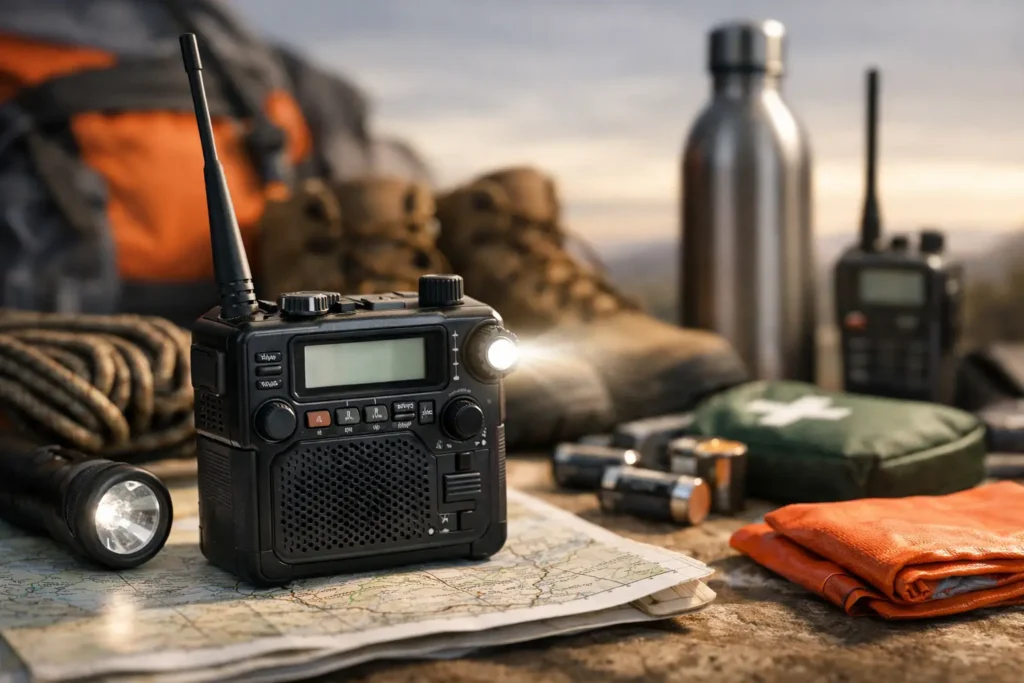
A severe-weather alert is not the time to find out that your phone battery is at 8%, the cell network is congested, and the radio you bought has been sitting uncharged in a closet. This emergency radio guide focuses on the details that matter when normal communication is unreliable: receiving official alerts, keeping the device powered, and making sure everyone in your household can use it without instructions.
An emergency radio is not a dramatic purchase for doomsday scenarios. For most homes, it is a practical backup for thunderstorms, tornado warnings, hurricanes, wildfire evacuations, winter outages, and extended blackouts. The best choice is rarely the one with the longest feature list. It is the one you can hear clearly, power easily, and trust when conditions change fast.
What an Emergency Radio Should Actually Do
Start with the job you need the radio to perform. A true emergency radio should receive local AM and FM broadcasts and National Weather Service alerts through NOAA Weather Radio. That combination gives you access to official weather information, local news coverage, evacuation instructions, and community updates when internet access is limited.
NOAA reception is the feature that separates a useful emergency device from an ordinary portable radio. NOAA Weather Radio broadcasts continuous weather information and urgent warnings through dedicated frequencies. Look for a model that receives all seven NOAA channels, not just one or two. Reception varies by location, terrain, building materials, and distance from the transmitter, so more channel options give you a better chance of finding a clear signal.
For households in areas prone to fast-moving severe weather, an alert function is worth prioritizing. These radios can sound an alarm when the National Weather Service issues a warning. Better models include Specific Area Message Encoding, usually called SAME. This lets you program alerts for your county or counties rather than being awakened by every warning issued across a broad region.
That feature is especially helpful if you live near a county line or in a metro area where alerts may cover places far from your home. It also comes with a trade-off: programming SAME codes takes a few minutes, and the radio is only as useful as its setup. A model left in its box with default settings is not a finished preparedness plan.
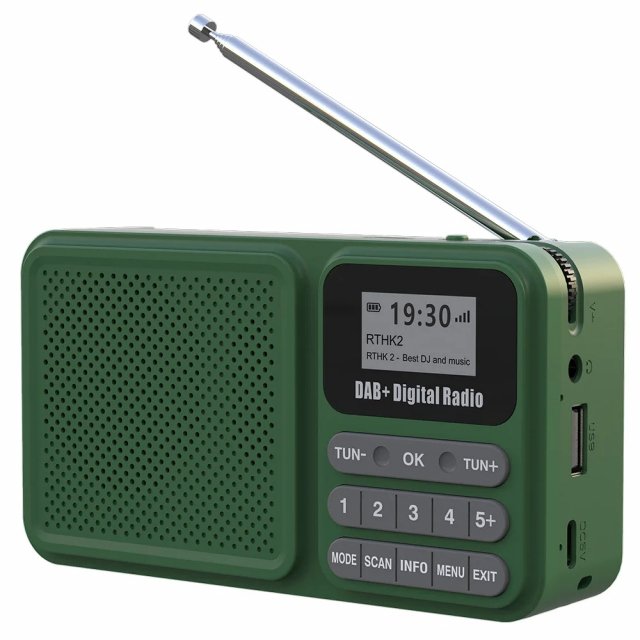
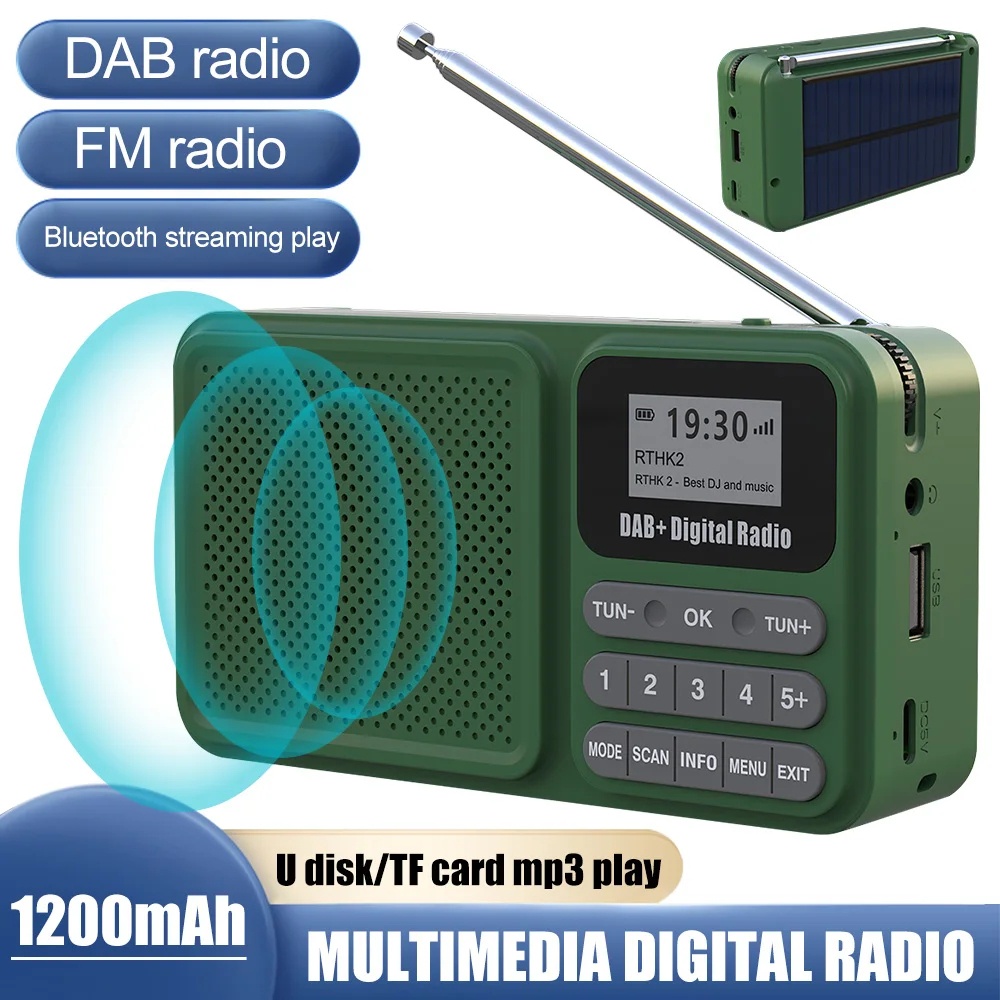
Emergency Radio Guide: Features Worth Paying For
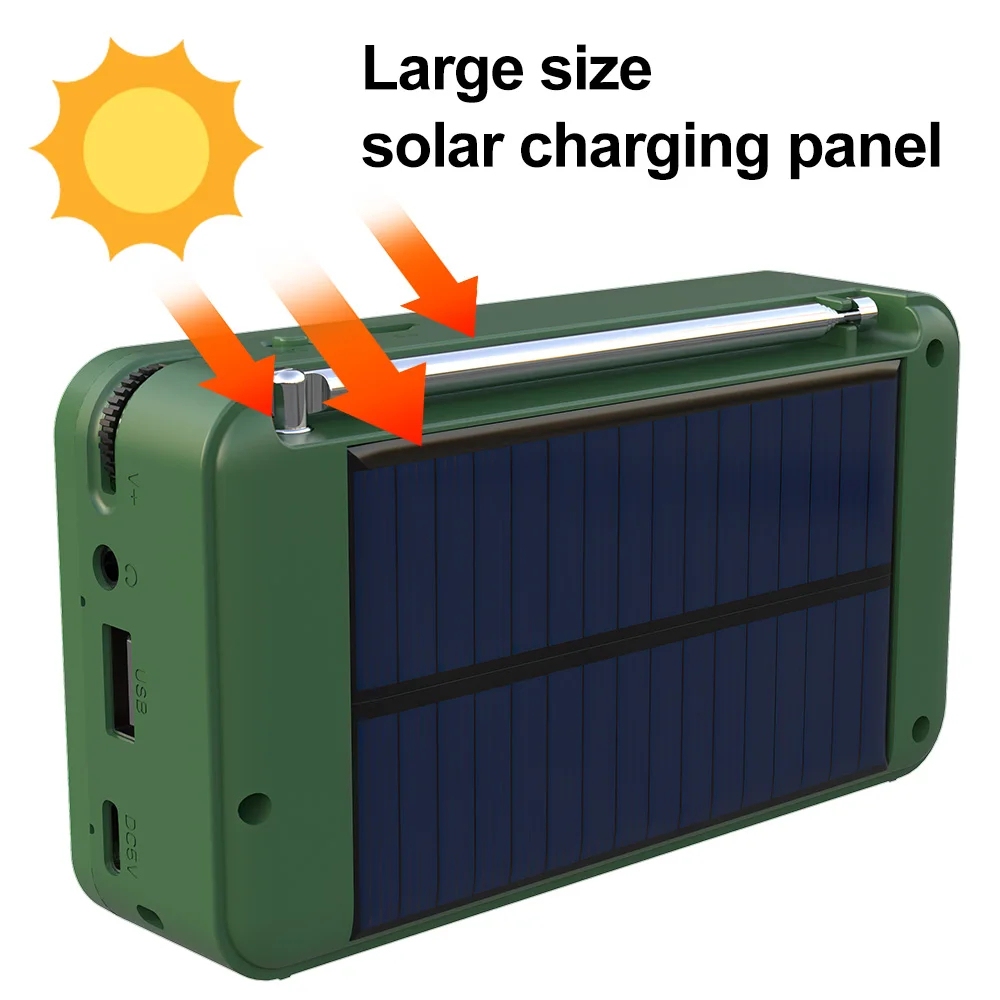
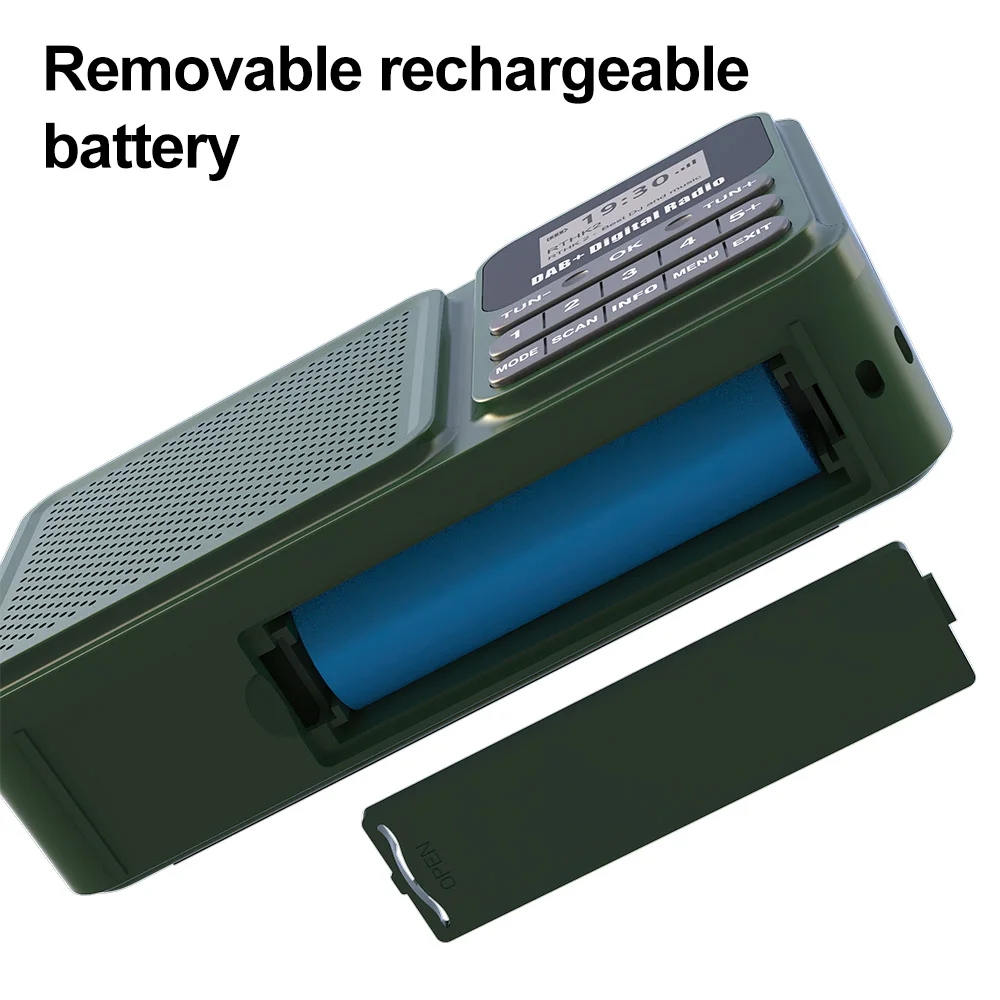
Shopping listings can make every radio sound equally capable. Focus on a smaller set of features that have a direct impact during an outage.Reliable power options matter more than a huge battery claim. A built-in rechargeable battery is convenient for routine use, but it should not be the only source of power. Models that also run on standard AA or AAA batteries are easier to keep ready because you can store fresh spares with your household supplies. A hand crank and solar panel are useful backup methods, but they are not substitutes for charged batteries or spare cells.Hand cranks require effort and produce limited power. They can keep a radio operating for short intervals and may provide enough charge for an emergency phone call, but cranking for long periods is tiring and inefficient. Solar charging is similarly dependent on weather, season, window placement, and daylight. Treat both as last-resort options rather than your primary plan.A clear, loud speaker is more valuable than surprisingly powerful Bluetooth audio. During a storm or while running a generator, you need speech that is understandable, not just audible. Controls should be large enough to use in low light, and the tuning system should be simple. Digital tuning is easier for finding an exact NOAA frequency; an analog dial can still work well, but it requires more patience and may be less precise.An external antenna often improves reception. A telescoping antenna gives you flexibility to reposition the radio near a window or higher shelf. Some compact radios have no external antenna, which makes them easier to pack but can limit performance inside concrete buildings, basements, or rural homes. If you need a radio mainly for tornado alerts, test reception in the room where you sleep, not only beside a window on a clear afternoon.A built-in flashlight and reading light can be genuinely useful, particularly if the device will live in a bedroom, kitchen, or emergency kit. Do not make them the deciding factor. A dedicated flashlight with fresh batteries is still a better lighting tool for most households, while your radio should remain focused on communication.USB charging capability is convenient but easy to overvalue. A radio with a USB output can provide a small phone charge when the grid is down. It may not have enough capacity to fully recharge a modern phone, especially after it has been used to run the radio. Consider it a way to preserve a critical amount of battery, not a replacement for a power bank.Choose the Right Type for Your Home
A compact weather radio makes sense for apartment dwellers, commuters, and anyone building a grab-and-go kit. It takes little space, can travel during an evacuation, and gives you a backup source of alerts away from home. The compromise is usually speaker size, battery capacity, and antenna performance.A larger tabletop alert radio is a better fit for a house where severe weather is a regular concern. It can stay plugged in, remain programmed for your area, and sound an alert loud enough to wake the household. If you choose this route, make sure it also has battery backup. A plug-in-only alert radio is least useful during the power failures that often accompany major weather events.For camping, road trips, and family outings, a portable multi-power radio can pull double duty. Look for a rugged body, a lanyard or carry handle, and straightforward charging. Waterproofing can help, but check what the rating actually covers. Water-resistant does not mean the radio can sit outside in heavy rain or survive being dropped into water.There is also a difference between an emergency radio and a two-way radio. A weather radio receives public broadcasts and official alerts. A two-way radio lets members of your group communicate with one another over short distances. They solve different problems. Families who evacuate in multiple vehicles may benefit from both, but a pair of walkie-talkies does not replace NOAA alert reception.Set It Up Before You Need It
A radio earns its place in your emergency supplies only after you test it. Unbox it, charge it fully, install backup batteries if it uses them, extend the antenna, and tune to the clearest NOAA channel. If it includes SAME alerts, enter the correct county codes and review which alert types are enabled.
Then test it where it will be kept. A basement may be the safest room during a tornado warning, but it can be a poor place for reception. You may need to keep the radio upstairs and bring it down when conditions worsen, or use an external antenna model. There is no universal setup because local signal strength is highly specific to your address.
Keep the radio somewhere visible and reachable, not buried in a storage tote. A kitchen counter, bedroom shelf, or designated emergency cabinet works better. Everyone in the home should know what the alert sounds like, how to turn up the volume, and which button changes the NOAA channel.
A simple maintenance routine prevents most disappointments. Check the charge and test reception at the start of each severe-weather season and after a long power outage. Replace disposable batteries before their expiration date, and keep them out of the device if you are storing it for months at a time to reduce the risk of corrosion.
Common Buying Mistakes to Avoid
The most common mistake is choosing based on accessories instead of reception. A radio with a compass, siren, light, solar panel, and phone cable may look prepared for anything, yet still struggle to receive a clear weather broadcast indoors. Prioritize NOAA coverage, antenna quality, power flexibility, and ease of use first.
Another mistake is assuming a hand crank guarantees readiness. A hand crank is reassuring, but a fully charged radio plus a set of fresh batteries is far more dependable at the start of an outage. Similarly, do not assume your phone makes a radio unnecessary. Wireless networks can remain available during some emergencies, but congestion, damaged infrastructure, limited charging, and spotty rural coverage can change that quickly.
Finally, avoid buying an overly complicated device for a person who needs something simple. Older adults, kids, guests, and stressed family members should be able to turn it on and hear information immediately. A few well-labeled controls beat a complicated menu when the lights are out.
The right radio is the one you will keep charged, test occasionally, and reach for without thinking. Put that level of everyday usability ahead of novelty features, and it can become one of the quietest, most practical tools in your home.

See the top‑rated emergency radios on Amazon






Pingback: Home Security Camera Review for Smarter Buying | PO‑STORE