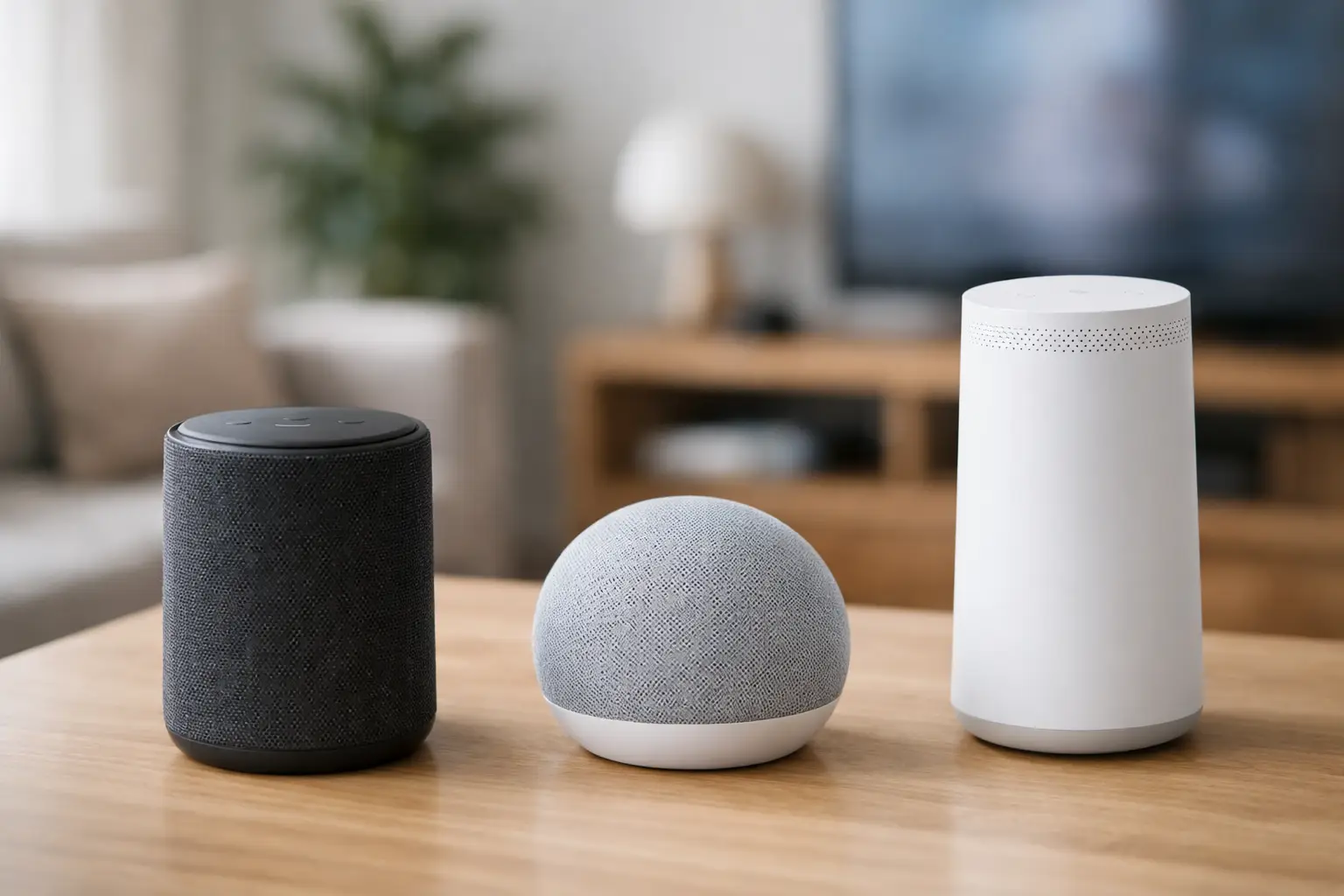
A smart speaker earns its counter space when it solves small, repeated problems: starting a playlist while your hands are messy, setting a timer mid-recipe, or turning off the lights from the couch. The best smart speakers do not need a complicated setup or constant attention. They simply fit the way your household already lives.
That sounds straightforward, but buying one can get confusing fast. Voice assistants, audio quality, smart-home compatibility, privacy settings, and subscriptions all affect whether a speaker becomes useful or ends up unplugged in a drawer. Here is what deserves your attention before you choose.
Start With the Job You Want It to Do
The right choice depends less on a long feature list and more on where the speaker will live. A compact model can be excellent on a nightstand, in a bathroom, or on a kitchen counter where you mainly need alarms, quick questions, and casual background music. It may sound thin in a large living room, though, especially once a dishwasher, TV, or conversation enters the picture.
For a main living area, prioritize a larger speaker with fuller bass and enough volume to fill the room without sounding strained. If music is a major reason for buying, audio quality should carry more weight than novelty features. A speaker that responds brilliantly to voice commands but makes favorite songs feel flat is rarely satisfying for long.
Think about placement, too. Smart speakers hear best when they are out in the open, not tucked behind a television or crowded into a shelf. Kitchens and bedrooms benefit from practical controls and clear voice pickup. In a home office, reliable call quality and the ability to mute the microphone quickly may matter more than powerful sound.
Choose an Ecosystem Before Choosing a Speaker
Most smart speakers are built around one voice-assistant ecosystem. That decision shapes the devices you can control easily, the music services that work best, and how naturally the speaker connects with the phones, TVs, and smart-home gear you already own.
If your home already uses compatible lights, plugs, thermostats, cameras, or streaming devices, look for a speaker that works directly with them. Mixing platforms is possible, but it often adds extra apps, duplicate routines, and frustrating moments when one device does not appear where you expect it. Convenience is the point, so avoid creating a system that needs its own instruction manual.
It also helps to check what everyone in the household uses. A speaker tied closely to one phone brand may be a natural fit for a single-person household but less flexible for a family with a mix of devices. For shared spaces, simple voice recognition, multiple user profiles, and easy guest access can make a real difference.
Compatibility claims deserve a closer look. “Works with” can mean anything from basic on-off control to access to every setting. Before buying, confirm that the speaker can handle the actions you care about, such as dimming lights by percentage, adjusting a thermostat, playing music in multiple rooms, or starting a morning routine.
Matter Can Reduce Friction, Not Eliminate It
Matter is a smart-home standard designed to help compatible products work across more platforms. It is a positive sign when you are building a new setup, particularly if you do not want to feel locked into one brand. Still, it is not a guarantee that every advanced feature will work identically everywhere.
Treat Matter support as added flexibility rather than a reason to skip compatibility research. The most reliable smart home is still the one made up of devices that clearly support your chosen ecosystem.
Sound Quality Is More Than Volume
Speaker specifications can be useful, but a practical listening test tells you more. Pay attention to vocal clarity at lower volumes, bass that feels present without becoming boomy, and whether the sound gets harsh when you turn it up. These details matter every day, while impressive-sounding technical claims may not.
A small speaker is often enough for podcasts, news briefings, and casual listening. For music lovers, a larger model or a matched pair is usually worth considering. Stereo pairing separates left and right channels, making music sound wider and more involving than a single unit can manage.
Multiroom audio is another feature that sounds minor until you use it. Being able to move music from the kitchen to the patio, or play the same playlist throughout the house, is genuinely convenient. The trade-off is that multiroom setups work best when speakers stay within the same ecosystem, so this is another reason to choose your platform with care.


The Smart Features That Actually Save Time
Voice commands are most useful when they replace actions you repeat. Timers, reminders, weather checks, shopping lists, calendar prompts, calling, and music controls are the everyday basics. A good assistant should understand ordinary language without requiring you to memorize stiff commands.
Routines are where smart speakers start to feel more personal. A single phrase such as “good morning” can turn on selected lights, share the weather, read your calendar, and begin a news briefing. At bedtime, a routine can lower lights, lock compatible doors, play white noise, and set an alarm. Keep these routines simple at first. The more steps and exceptions they contain, the less likely your household is to use them.
Do not buy based on features you would never use. A speaker with a temperature sensor, gesture controls, or a built-in display can be helpful in the right room, but those extras should support a clear need. A display is useful for recipes, video calls, and visual camera feeds; it is less appealing if you want a low-distraction bedroom or are sensitive about a screen in a private space.
Privacy Should Be a Buying Factor, Not Fine Print
A smart speaker uses microphones to listen for a wake word. For many shoppers, that trade-off is acceptable, but it should be a deliberate choice. Review the brand’s privacy controls before bringing a device home, including microphone mute options, voice-recording settings, and the ability to review or delete stored activity.
A physical microphone-off button is especially reassuring because it gives you a visible, immediate way to disable listening. Learn what the indicator lights mean and place the speaker somewhere you can reach easily. It is also wise to disable features you do not plan to use, rather than leaving every setting on by default.
Privacy is not only about the speaker itself. If it can control cameras, locks, or other sensitive devices, use strong account passwords and turn on two-factor authentication. Shared households should also agree on rules for purchases, calling features, and access to security devices.


Budget for the System, Not Just One Device
The least expensive speaker can be a smart way to test an ecosystem, but it may not be the best value if you later replace it for better sound or buy separate gear to fill another room. Consider the likely next step. If you want music in two rooms, stereo sound in the living room, or whole-home controls, it can make sense to start with a platform that offers a clear path to expand.
Also look beyond the sticker price. Some music services require subscriptions for their full catalog, while smart cameras, cloud storage, and advanced security features can bring recurring fees. None of these costs are automatically a dealbreaker, but they should be part of the decision rather than an unpleasant surprise after setup.
A Practical Way to Make the Final Choice
Before ordering, write down the one room, the two or three routines, and the music or media services that matter most. Then confirm the speaker fits those needs, works with your current devices, and has privacy controls you are comfortable using. This short check is more useful than comparing every specification on a product page.
Smart speakers are at their best when they quietly remove friction from a home. Choose one for the habits you already have, give yourself room to grow, and you are far more likely to end up with a helpful household tool instead of another gadget asking for attention.

Need more ideas? Check out our recommended Smart Speakers from trusted affiliates.