

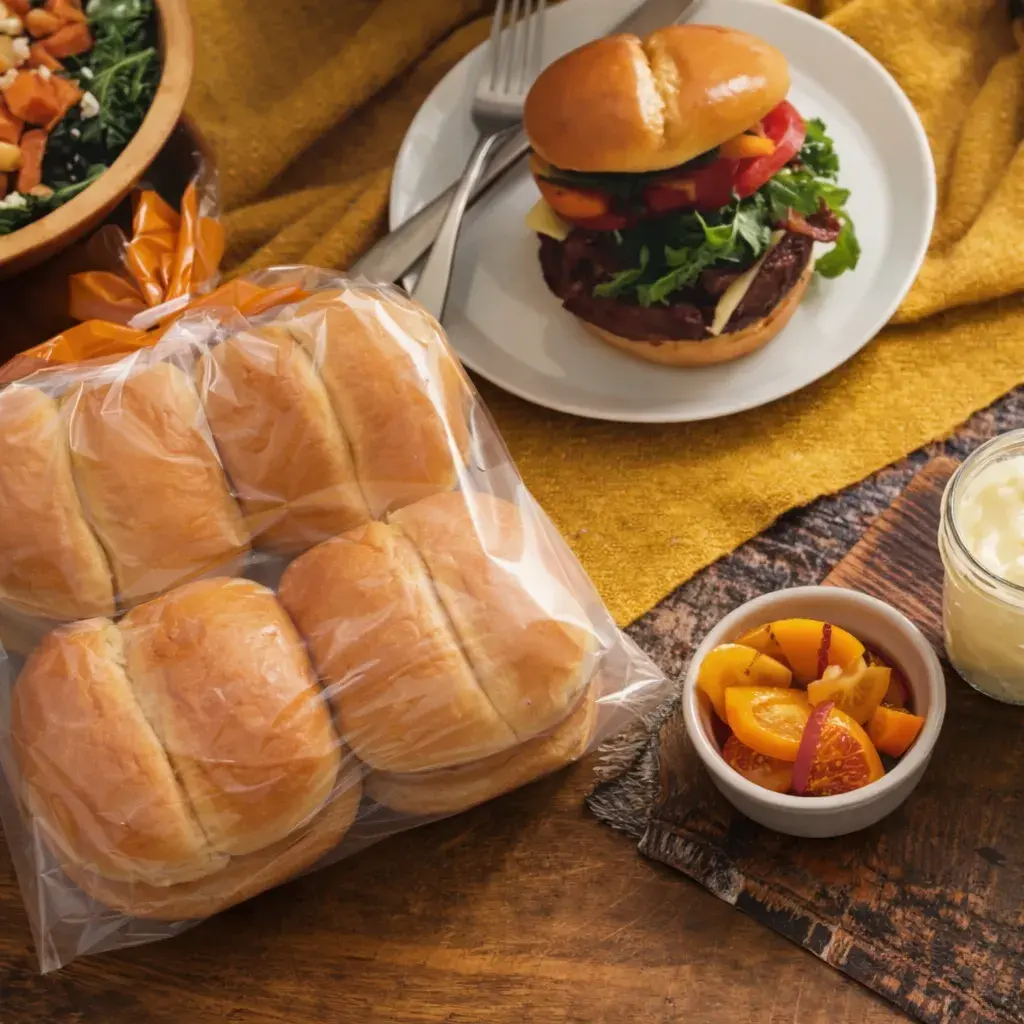
That prominent Non-GMO label on your favorite buns may not be telling the whole story.
1. The Label That Looks Like a Promise
Picture this: You’re in the bread aisle, reaching for a pack of hamburger buns. Your eye catches a bright orange butterfly seal — Non-GMO Project Verified. A quiet sense of relief settles in. These must be the healthier choice. You toss them in the cart and keep moving.
It’s a scene that plays out millions of times a week across American grocery stores. And it makes perfect sense — that butterfly seal feels like a stamp of health. But here’s what it actually means: the product does not contain genetically modified organisms. That’s it.
The Non-GMO Project Verified label is what’s known as a single-attribute claim. It tells you one thing the product isn’t — it says nothing about what the product is. It doesn’t address pesticides, synthetic additives, preservatives, artificial colors, or how heavily processed the ingredients are. A product loaded with high fructose corn syrup, dough conditioners, and artificial preservatives can carry that butterfly just as proudly as a loaf made with five simple ingredients.
2. Non-GMO vs. Organic — They’re Not the Same Thing
One of the most common misconceptions in the grocery aisle is treating “Non-GMO” and “Organic” as interchangeable. They’re not — not even close. Here’s how they differ:
Non-GMO Project Verified is a single-attribute verification administered by the Non-GMO Project, an independent nonprofit. It confirms that a product has been produced according to practices that avoid genetically modified organisms. It does not regulate pesticide use,
- synthetic fertilizers, artificial additives, animal welfare, or sustainability practices. It is not a government certification.
- USDA Organic is a comprehensive federal certification governed by the National Organic Program under the U.S. Department of Agriculture. It prohibits synthetic pesticides, GMOs, irradiation, sewage sludge, and most artificial preservatives and additives. It covers the entire production system — soil health, animal welfare, environmental stewardship, and processing standards.
Criteria | Non-GMO Project Verified | USDA Organic |
GMO Status | No GMO ingredients | No GMO ingredients |
Pesticide Regulation | Not addressed | Synthetic pesticides prohibited |
Additive Regulation | Not addressed | Most artificial additives prohibited |
Certification Body | Non-GMO Project (nonprofit) | USDA / National Organic Program |
Scope | Single attribute (GMO-free only) | Whole system (soil, inputs, processing) |
In short: every USDA Organic product is already non-GMO by definition, but a Non-GMO product is not necessarily organic — or clean, or minimally processed, or free from synthetic chemicals.
3. The Enriched Flour Problem
Flip over most commercial hamburger bun packages and the very first ingredient you’ll see is enriched wheat flour. That word “enriched” sounds like a bonus. It isn’t.
Enriched flour is wheat flour that has been stripped of its natural bran and germ during industrial milling — removing the fiber, healthy fats, and naturally occurring vitamins. Manufacturers then add back a handful of synthetic nutrients: niacin, reduced iron, thiamine mononitrate, riboflavin, and folic acid. What you end up with is a nutritionally hollow base that’s been artificially re-fortified.
Here’s the kicker: wheat is not even a GMO crop. There are currently no genetically modified wheat varieties approved for commercial sale in the United States. So a bun made with enriched wheat flour can carry the Non-GMO butterfly with complete technical accuracy — while still being a heavily processed product built on a nutritionally depleted foundation.
Key Insight Enriched flour would not qualify in a truly clean-ingredient or organic product. The synthetic fortification process itself is a marker of heavy industrial processing — exactly the kind of processing the Non-GMO label doesn’t address. |
4. Additives Hiding Behind the Butterfly
The Non-GMO butterfly seal can coexist comfortably with a long list of additives that a health-conscious consumer would want to avoid. Here are common ingredients found in Non-GMO Verified bun products:
- High fructose corn syrup — made from non-GMO corn, but still a highly processed sweetener linked to metabolic concerns
- Calcium sulfate — an industrial dough conditioner used to improve texture in mass production
- Sodium stearoyl lactylate — an emulsifier and dough strengthener created through chemical processing
- DATEM (diacetyl tartaric acid ester of mono- and diglycerides) — another synthetic dough conditioner
- Calcium propionate — an artificial preservative used to inhibit mold growth
- Mono- and diglycerides — emulsifiers that extend shelf life and modify texture
- Soy lecithin — a processing aid and emulsifier, often extracted using hexane solvents
- Caramel color — an artificial colorant added to make white bread look more “wholesome”
None of these are prohibited by Non-GMO verification. The butterfly seal and a 25-ingredient label can live side by side on the same package — and they frequently do.
5. Why Consumers Get Confused
It’s not your fault if you’ve been reading the Non-GMO label as a broader health endorsement. The confusion is practically built into the system:
- Visual prominence: The butterfly seal is large, colorful, and placed front-and-center on packaging. It feels like a stamp of overall quality, not a narrow technical claim.
- Mental shortcuts: Research in consumer psychology shows that shoppers routinely conflate “Non-GMO” with “natural,” “organic,” and “clean.” These are fundamentally different concepts, but the brain groups them together under a “healthy” umbrella.
- Irrelevant labeling: Some products carry Non-GMO labels on items where GMOs were never possible in the first place — table salt, bottled water, fresh oranges. This creates a misleading impression that the verified product has been specially screened when no GMO version of that product even exists.
Package design cues: Manufacturers pair the butterfly seal with green color palettes, leaf imagery, pastoral farm scenes, and wellness-oriented language. The entire visual identity reinforces a “wholesome” perception — even when the ingredients list tells a completely
6. How to Choose Cleaner Buns — A PO-Store.com Guide
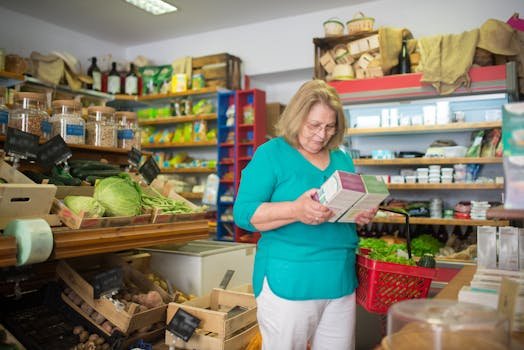
The good news? Once you know what to look for, choosing better products becomes second nature. Here’s our step-by-step guide:
- Flip the package. Always read the ingredients list, not just the front label. Marketing lives on the front; truth lives on the back.
- Look for short ingredient lists. The cleanest buns contain recognizable whole foods: whole wheat flour, water, yeast, honey, salt, olive oil. If you can picture every ingredient in your kitchen, you’re on the right track.
- Avoid enriched flour as a first ingredient. If “enriched wheat flour” leads the list, that’s a signal the product is built on a heavily processed base — regardless of what seals decorate the front.
- Watch for dough conditioners and preservatives. Ingredients like DATEM, sodium stearoyl lactylate, and calcium propionate are hallmarks of industrial-scale baking, not wholesome bread-making.
- Prefer USDA Organic over Non-GMO alone. If clean ingredients matter to you, Organic certification provides a far more comprehensive guarantee than Non-GMO verification by itself.
- Consider baking your own or buying local. Local bakeries with transparent ingredient sourcing often offer the simplest, cleanest options — and homemade buns require just a handful of pantry staples.
- Explore PO-Store.com’s Wellness section. At PO-Store.com, we curate products with ingredient transparency in mind. Browse our Wellness collection for buns and breads that meet higher standards than a single butterfly seal.
PO-Store.com Quick Rule of Thumb
If the ingredients list has more than 10 items — or includes words you wouldn’t find in a home kitchen — keep looking. Clean eating starts with clean reading.
Knowledge Is Your Best Ingredient
Our goal here isn’t to make you anxious in the bread aisle. It’s to help you see past the marketing so you can make choices that actually align with your health goals. The Non-GMO label isn’t meaningless — it’s just incomplete. And once you understand what it does and doesn’t cover, you’re already a more empowered shopper.
Being informed isn’t overwhelming. It’s freeing. Every time you flip that package over, you’re taking your health into your own hands — one ingredient list at a time.
Here’s to smarter shopping and cleaner eating.
Want to Learn More?
Visit our Wellness section for more informative posts like this one.

To buy our products directly, visit us at po-store.store — coming soon!
